Clear Air: Wind Shadow, Dirty Air and the Lee Bow
Clear air is wind no other boat has used. Every boat leaves a wind shadow downwind of its sails, and sailing in it, in dirty air, slows you and heads you. Upwind the shadow trails astern and to leeward. Stay out of other boats' shadows, and use yours and the lee bow to slow the boats around you.
What clear air is
Clear air is wind no other boat has used. A sail works by turning the wind, so every boat leaves the air behind its sails slower, rougher and bent. Upwind, your speed and your pointing both come from the wind you get, so used air costs you twice.
This is tactics, you against the fleet. The wind's own shifts and puffs are strategy, and a good shift is worth less if you sail it in another boat's air.
Where the wind shadow falls
A boat's wind shadow trails downwind of its sails along the apparent wind, the wind the crew feels, not the true wind. Upwind the apparent wind comes from well forward, so the shadow lies astern and to leeward, closer to the boat's wake than straight downwind.
It widens as it trails, and it is worst in the first two or three lengths behind the sails. It reaches farther in light air than in a breeze, because a stronger wind fills the gap back in sooner.
In SailMOB a shadow reaches about 5 boat lengths at the default 12 knots, 8 lengths at 8 knots, and 4 from 16 knots up.
Dirty air: slower and headed
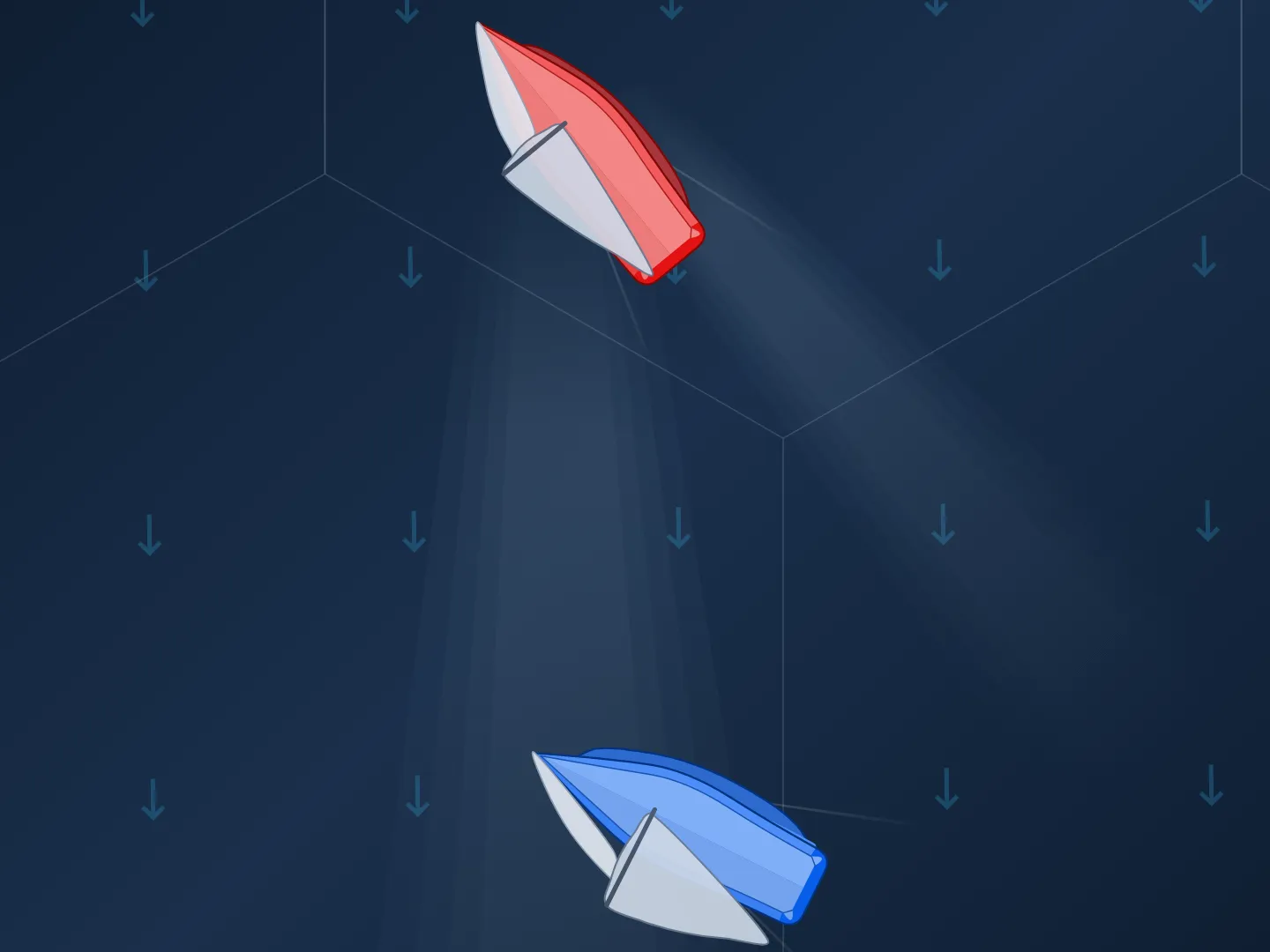
Sail into another boat's shadow and you are in dirty air: less wind, and wind bent so that it heads you. You go slower and point lower, so the boat ahead pulls away while you sit in it.
The classic spot is clear astern of a boat and a little to leeward. You cannot sail through her: while you are clear astern on the same tack, you keep clear (rule 12). Tack away, or bear off a few degrees and foot out to leeward of her shadow into clear air.
The lee bow
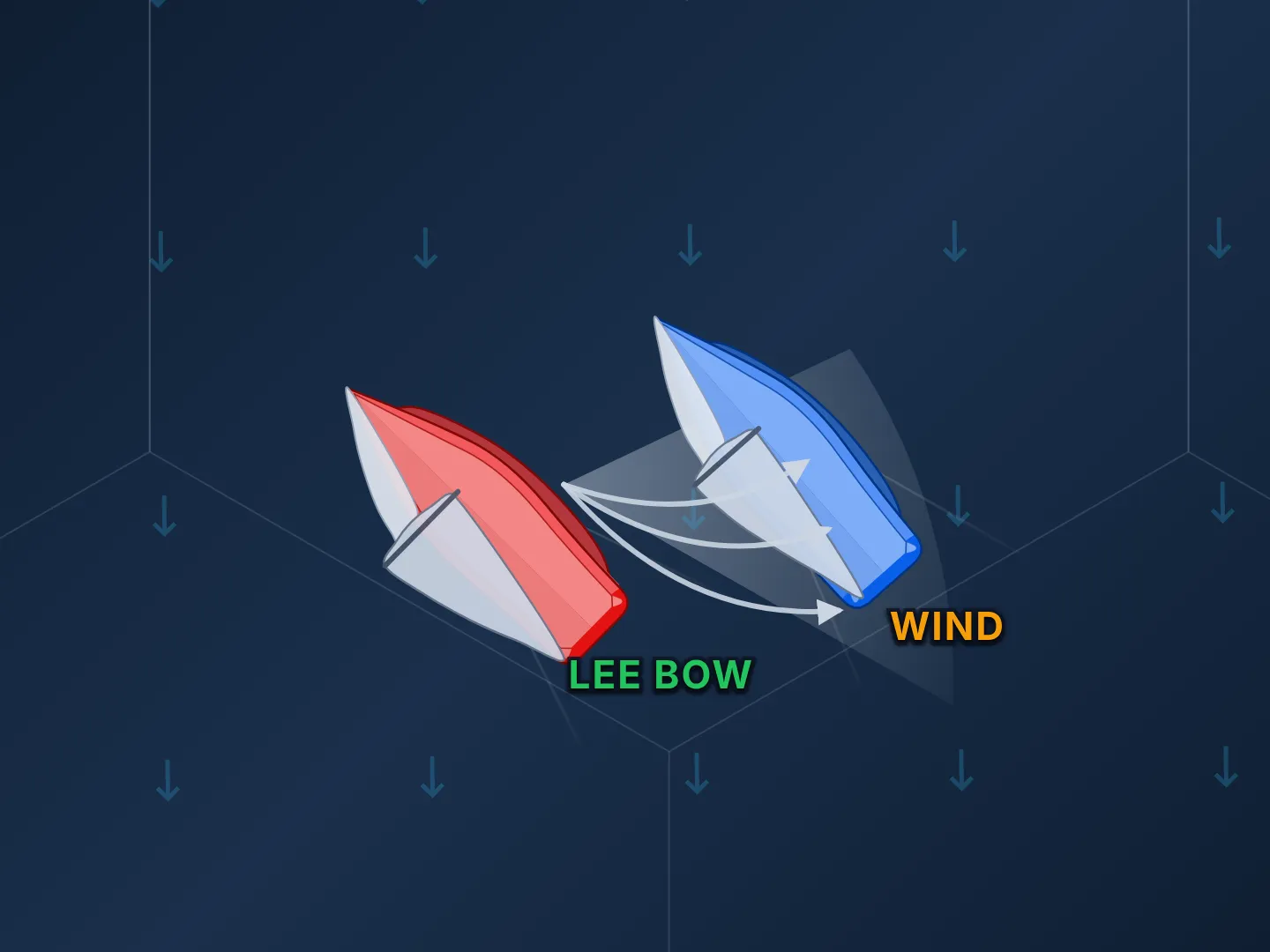
Sails bend the wind on their windward side too. Sit just ahead and to leeward of another boat on the same tack, and the air coming off your sails blows back onto hers. She sails in wind that is headed and a little lighter while you sail in clear air. That spot is the lee bow, also called the safe leeward position.
It is a rights position as well. Overlapped on the same tack, the windward boat keeps clear of the leeward boat (rule 11). Headed, slowed and unable to sail down on you, she usually tacks away. In the drill you sail the windward boat: keep clear, and tack out for clear air.
In SailMOB the effect reaches under two boat lengths to windward of the leeward boat, from just forward of her bow to past her stern, and heads the windward boat by up to about 2 degrees. Small, but it lasts as long as she stays there.
Setting up a lee bow from port tack
The lee bow is the port-tack answer to a starboard boat you cannot cross. Instead of ducking her stern, tack onto starboard just ahead and to leeward of her. Land too far to leeward and your sails never touch her wind; land too close and you foul her.
The rules set the timing. On port you keep clear (rule 10), and from the moment you pass head to wind until you are close-hauled, you are tacking and still keep clear (rule 13). Once you are close-hauled on starboard and to leeward, she keeps clear (rule 11), but you have just gained right of way, so at first you must give her room to do it (rule 15).
Tack with speed and get your sails drawing. A luffing sail bends nothing: pinch so high that your sails luff and the lee bow fades, though the dirty air behind you gets worse.
Getting out of bad air
Bad air does not get better on its own. Get out early, on your terms.
- Tack, if you can clear the boats on the other tack and the tack does not land you in someone else's shadow.
- Bear off a few degrees and foot, if you are far enough to leeward to get out from under her shadow.
- Before you tack on a header, look where you will land. A shift sailed in dirty air is worth less.
- Off the start line, look for clear air first. A boat close on your lee bow, or just ahead and to windward of you, slows you from the gun.
Using your shadow on a rival
Clear air works both ways. When you are ahead, tack so your shadow falls across the boat behind, and she must sail in your dirty air or tack away. That is a tight cover, the sharp end of covering.
A loose cover stays between her and the windward mark without landing your shadow on her, so she has less reason to tack off and find a shift of her own. Cover tightly to slow one boat; cover loosely to hold a lead over several.
Downwind, the shadow points ahead
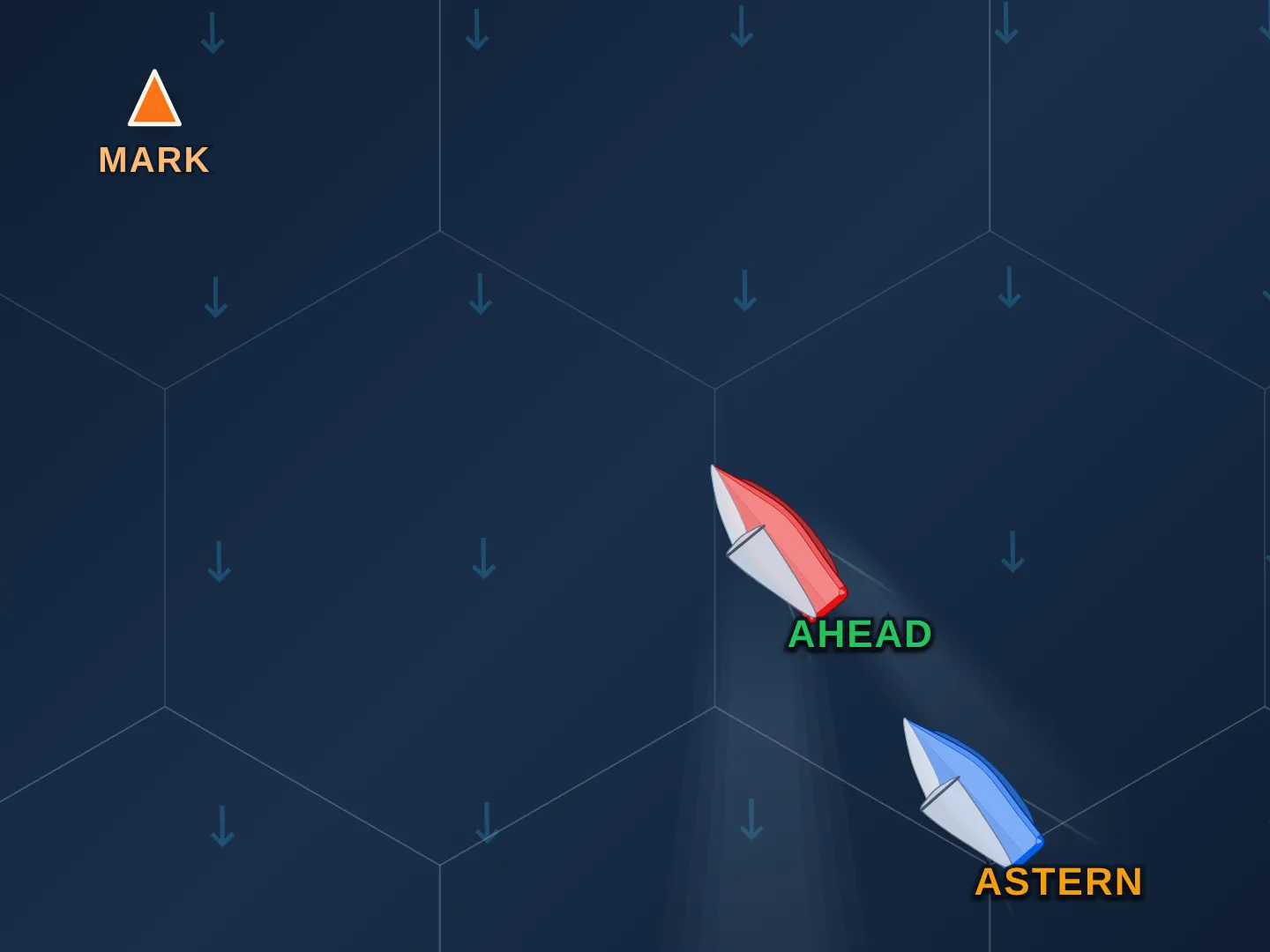
On a run the apparent wind comes from behind, so your shadow reaches forward, toward the boats ahead. Downwind the boat behind attacks: steer to put your shadow on the leader's sails. If you are leading, get out of line with the boats behind you.
How SailMOB models it
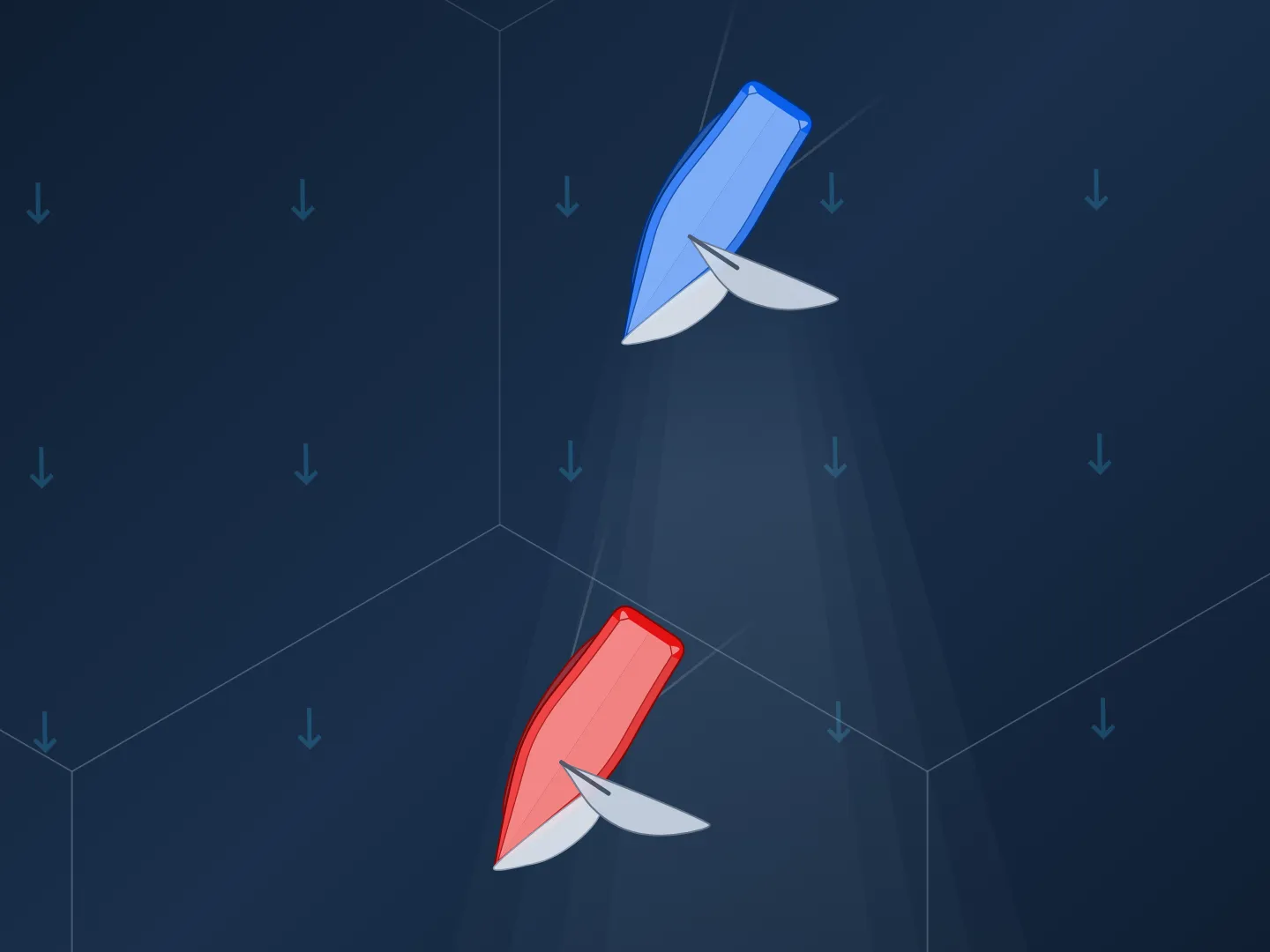
Every boat in a SailMOB race casts a wind shadow along its apparent wind and a lee bow off its windward side, yours included. Both slow the wind and bend it, so dirty air heads you as well as slowing you. A boat whose sails are luffing throws more dirty air but no lee bow.
The TWS readout at the top of the screen is the wind at your boat, so it drops when you sail into another boat's shadow. The Wind Shadows layer (H on a keyboard, or the Layers menu) shows the dirty air behind each boat. On a phone it starts off.
Questions
What is a wind shadow in sailing?
The patch of slower, disturbed air a boat leaves downwind of its sails. Upwind it trails astern and to leeward along the apparent wind, and a boat sailing in it is in dirty air.
How far does a wind shadow reach?
Several boat lengths, farther in light air than in a breeze, and it is strongest in the first two or three. In SailMOB it reaches about 5 lengths at 12 knots and 8 at 8 knots.
What is the difference between wind shadow and dirty air?
Mostly two names for one thing. The wind shadow is the place, downwind of a boat's sails; dirty air is the wind you get when you sail in it.
What does lee bow mean in sailing?
Sitting just ahead and to leeward of another boat on the same tack, so the wind off your sails heads and slows hers. It is a verb too: to lee-bow a boat is to tack into that spot.
Is lee-bowing the tide the same thing?
No. Lee-bowing the tide means choosing the tack that puts the current on your leeward bow, a navigation idea. The lee bow here is boat against boat: the wind one boat's sails bend onto another.