Mark-Room and the Zone: Rule 18 Explained
Mark-room is the room a boat needs to sail to a mark and round it. Under rule 18, whoever is overlapped inside when the first boat reaches the zone, three hull lengths from the mark, is owed it. If no one is overlapped, the boat that got there first is owed it. That holds for the whole rounding.
What mark-room is
Mark-room is room to sail to the mark when your proper course takes you close to it, and room to round it. It is not right of way. The outside boat can still be the right-of-way boat, on starboard or to leeward, and still owe you room to round.
What you are owed is room, not a lane. Mark-room does not include room to sail your proper course, so the wide-in, tight-out rounding you would sail alone is yours only if the water is there. Sail wider or slower than the rounding needs and you are outside your mark-room, back under the ordinary right-of-way rules.
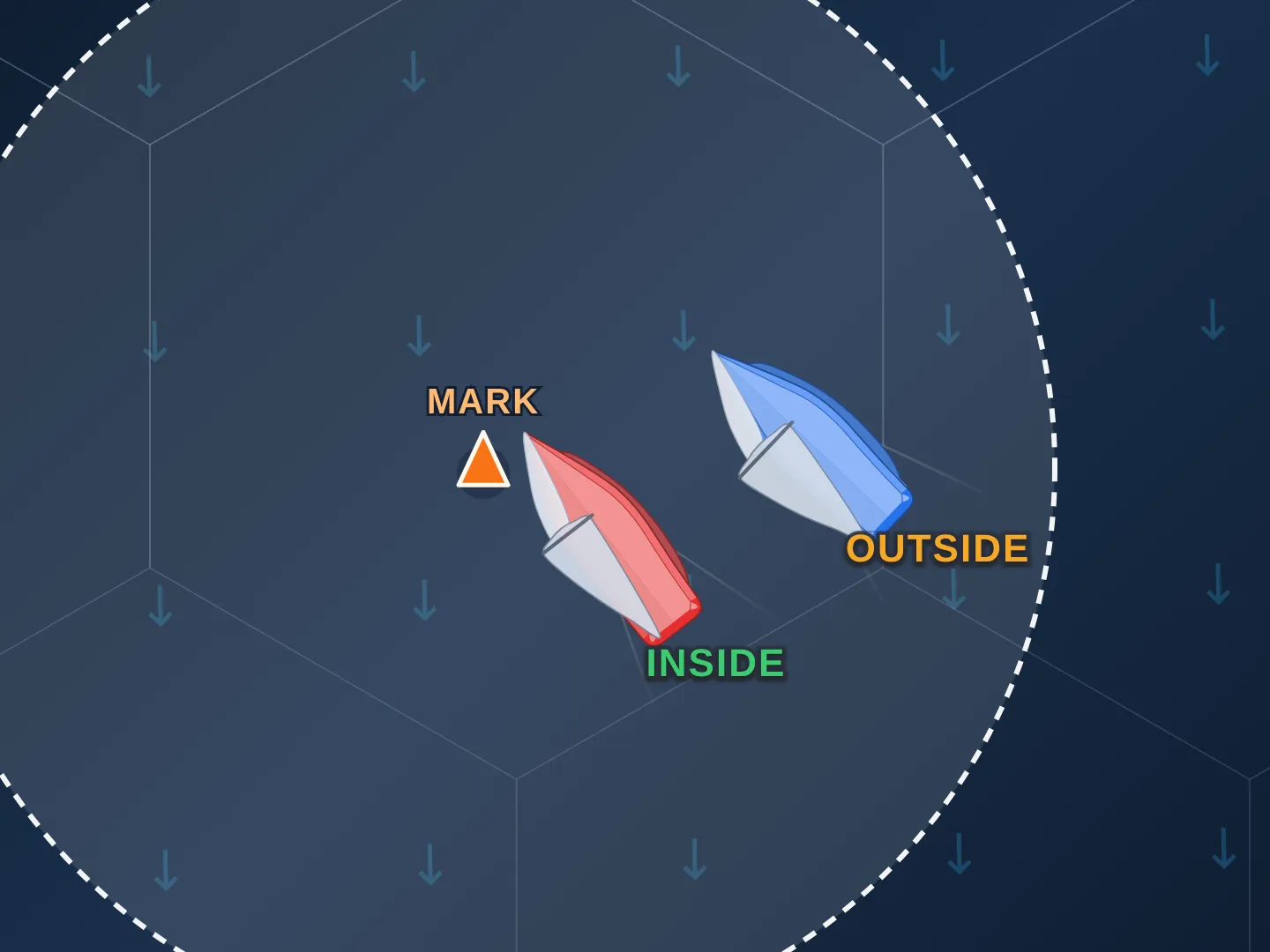
The zone decides it
The zone is the circle around a mark three hull lengths out, measured with the hull length of the boat nearer the mark. Rule 18 applies between boats that must leave the mark on the same side once at least one of them is in the zone.
Who owes mark-room is fixed at one moment: when the first of the boats reaches the zone. Everything you do to win a rounding has to happen before that.
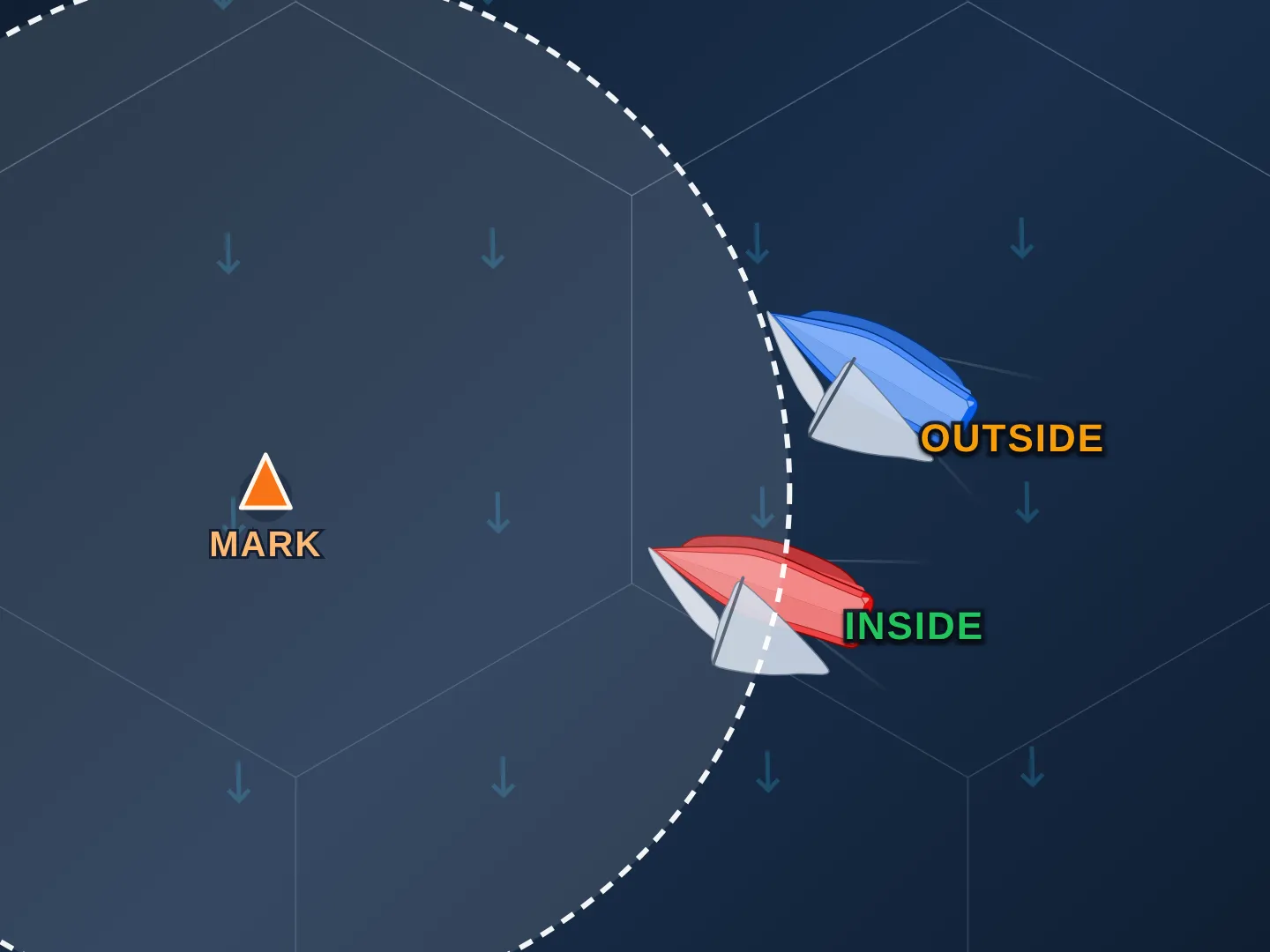
Overlapped at the zone: the inside boat gets room
If the boats are overlapped when the first of them reaches the zone, the outside boat must give the inside boat mark-room (rule 18.2(a)(1)). That is the common case at a leeward gate, where the fleet arrives together on a run.
Two boats are overlapped when neither is clear astern of the other. A bow a few inches past the other boat's stern line counts, so call it out loud before the zone: "Overlap!" and, from the outside, "No overlap!" if you think it was won late.
Clear ahead at the zone: the freeze
If the boats are not overlapped, the boat that has not reached the zone owes mark-room to the one that has (rule 18.2(a)(2)). Get there clear ahead and the boat behind owes you room for the whole rounding.
The obligation stays even if the overlap changes later. A boat that rolls up on your inside after you reached the zone gains nothing from it. Sailors call this the freeze: rights are set at the zone and do not reset in it.
When rule 18 switches off
Rule 18 does not apply between boats on opposite tacks on a beat to windward (rule 18.1(a)(1)). A port-tacker inside at the windward mark is owed nothing by a starboard boat. Rule 10 decides it: port keeps clear, so duck or tack.
Rule 18 also does not apply at a starting mark surrounded by navigable water while boats approach it to start. That is why a boat barging in at the committee boat end has no right to room.
Rights are not a license
Holding right of way and being owed mark-room still does not let you turn into a boat. Under rule 16.1, a right-of-way boat that changes course must give the other boat room to keep clear. Luff hard into a boat that has no room to respond and you break it, even when she should not have been there.
Touching the mark
Touch a mark and you break rule 31. Unless the sailing instructions say otherwise, you can take a One-Turn Penalty (one tack and one jibe) once you are well clear of other boats. Most touches happen following a boat round close astern, so leave yourself room to steer around the mark as well as her.
Using it in a race
Rule 18 is a timing rule, so the tactics are about where you are a few lengths before the zone.
- Inside and behind: build the overlap before the first boat reaches the zone, not after. A late overlap is worth nothing.
- Outside: if you cannot break the overlap before the zone, slow down and go behind. A clean rounding a length back beats a foul.
- Clear ahead: while the boat behind stays clear astern on the same tack, she must keep clear of you anyway (rule 12), so sail wide in, tight out if the water is there. If she gets an overlap inside you in the zone, you are still owed mark-room, but only room to round, not that wider line.
- Inside with room: you are owed room to round, not your favorite line. Take the room you need and no more.
Questions
How big is the zone in sailing?
Three hull lengths from the mark, using the hull length of the boat nearer to it.
Does mark-room apply between boats on opposite tacks?
Not on a beat to windward. Rule 18.1(a)(1) switches rule 18 off between boats on opposite tacks going upwind, and rule 10 (port keeps clear of starboard) decides it. Reaching and running, it usually applies on either tack.
When does mark-room end?
Rule 18 stops applying between two boats once mark-room has been given (rule 18.1(b)). The entitlement set at the zone also ends early if the boat owed it passes head to wind or leaves the zone.
Do you get mark-room at the start?
No. Rule 18 does not apply at a starting mark surrounded by navigable water while boats approach it to start, which is why barging in at the committee boat earns nothing.
What is the penalty for touching a mark?
A One-Turn Penalty (rules 44.1 and 44.2): one tack and one jibe, taken promptly once you are well clear of other boats, unless the sailing instructions set a different penalty.