Sailing Terms,
in plain language.
Every sport has its own language, and sailing has more than most. Here is the start-line vocabulary, the points of sail, and the racing rules you will meet in your first few races, without the gatekeeping.
A starter set of the terms that matter most in SailMOB. The full glossary lives inside the game, where every term pops up right when you need it. Jump in and see them in action.
Know the words? The guides show what to do with them in a race.
Getting Oriented
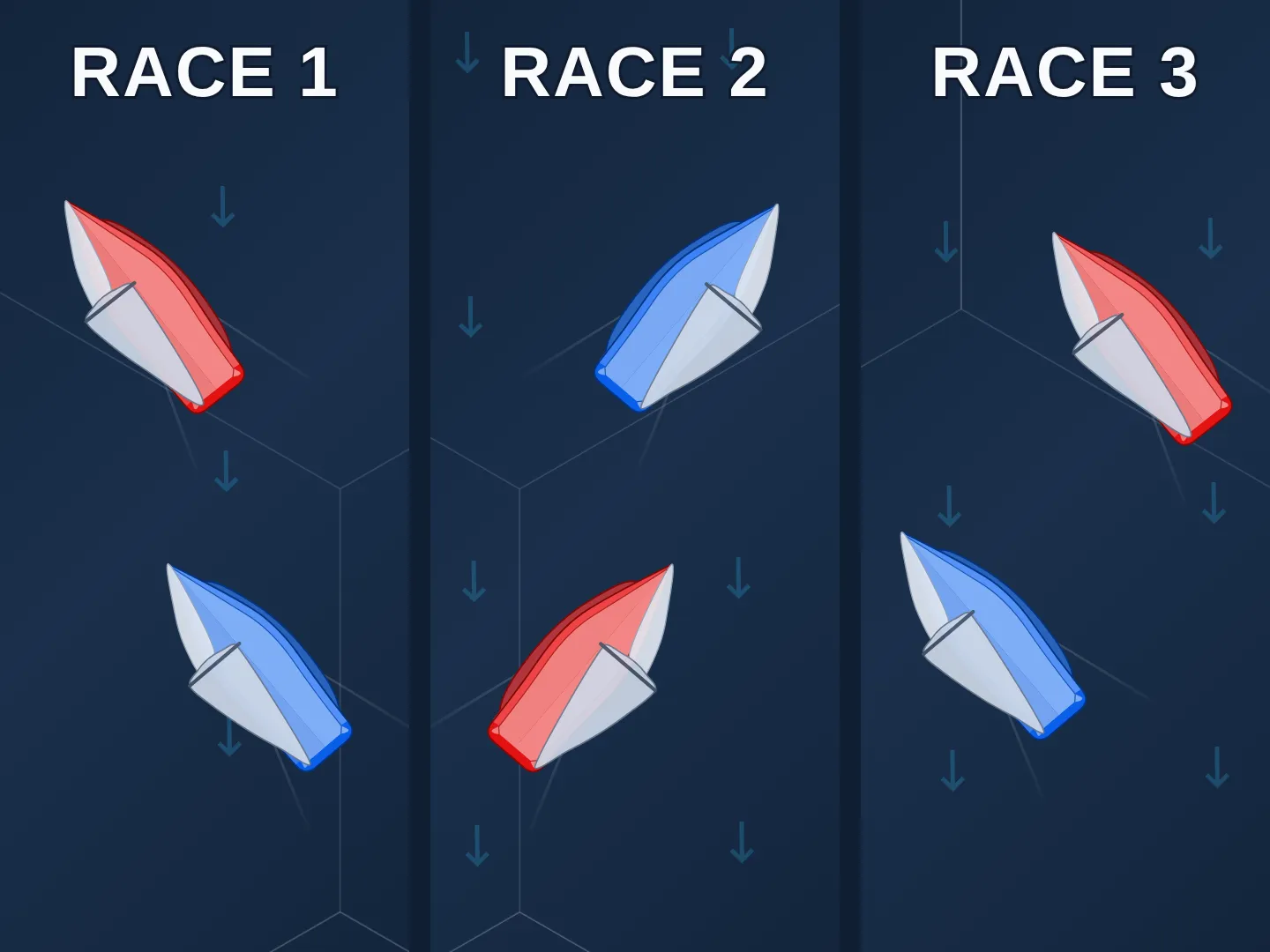
Regatta
A sailing competition made up of a series of races, scored together to decide an overall winner.
your club season, a championship, the Olympics – all regattas. The races SailMOB drills are the building blocks of one.
Port & Starboard
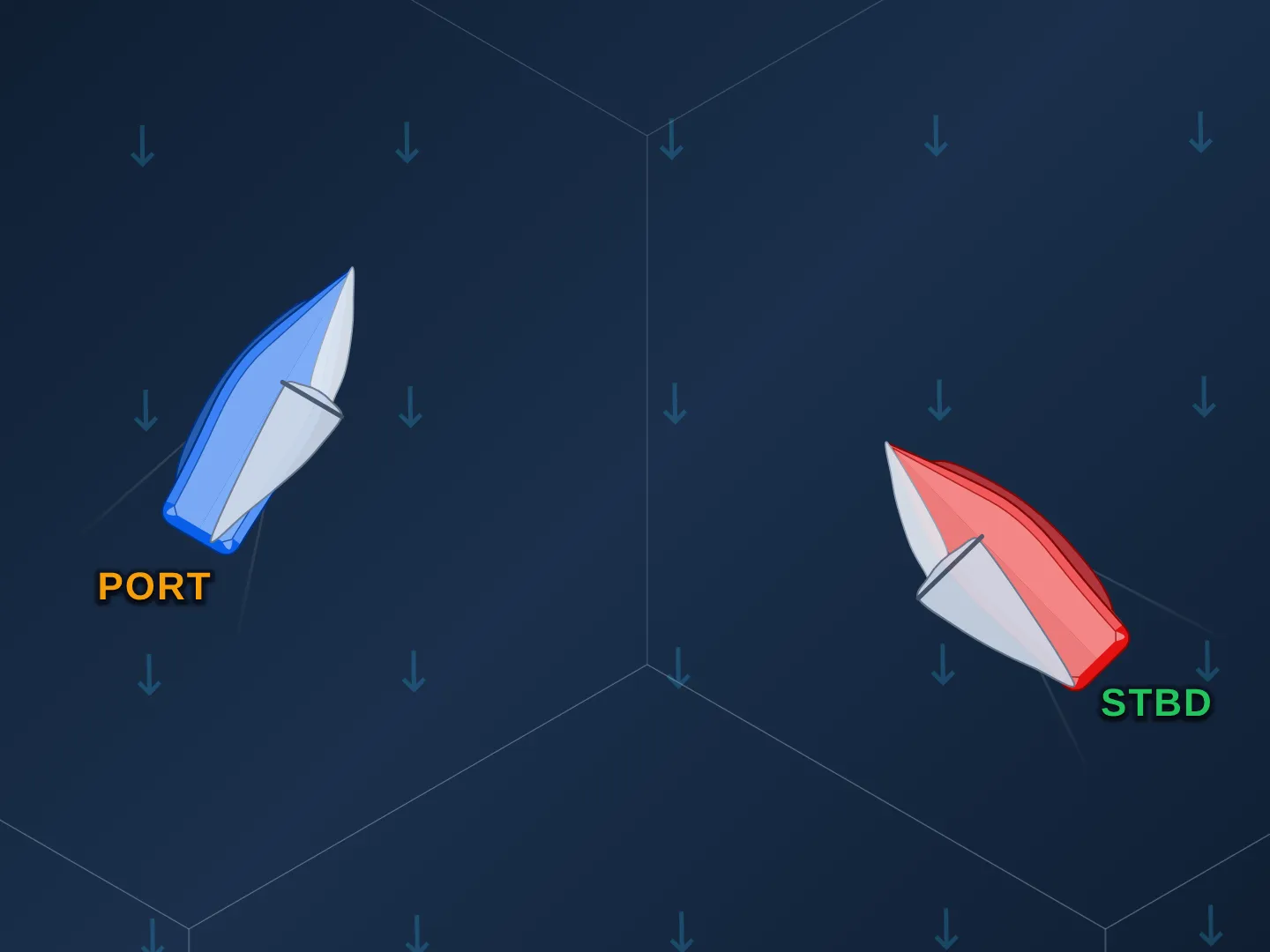
Port is the left side of the boat as you face forward; starboard is the right.
a boat on starboard tack almost always has right of way, which is why "Starboard!" is the loudest word on the course.
Windward & Leeward
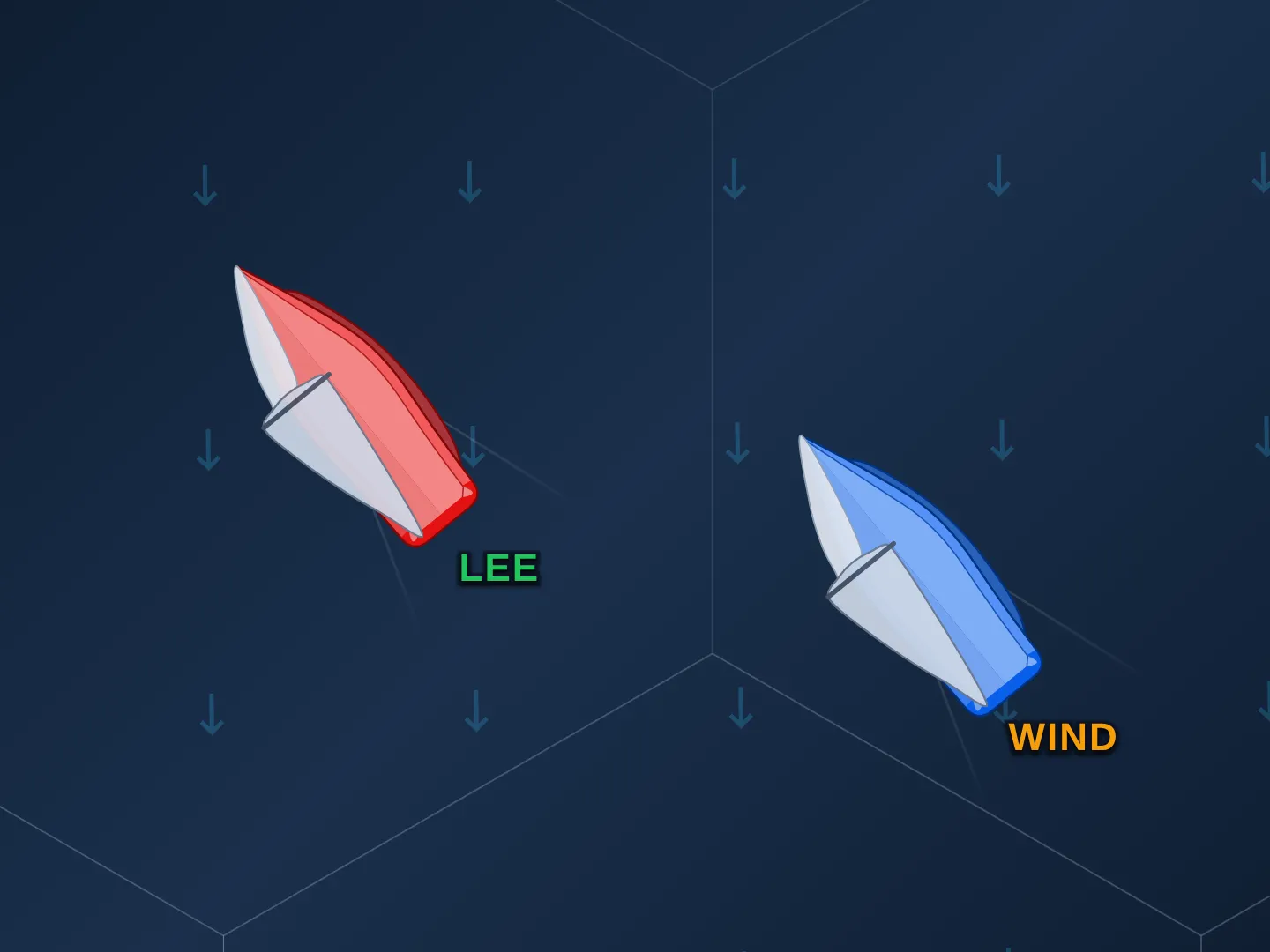
Windward is the side the wind hits first; leeward is the sheltered side the wind blows toward.
when two boats overlap, the leeward one usually has rights over the windward one.
Tack
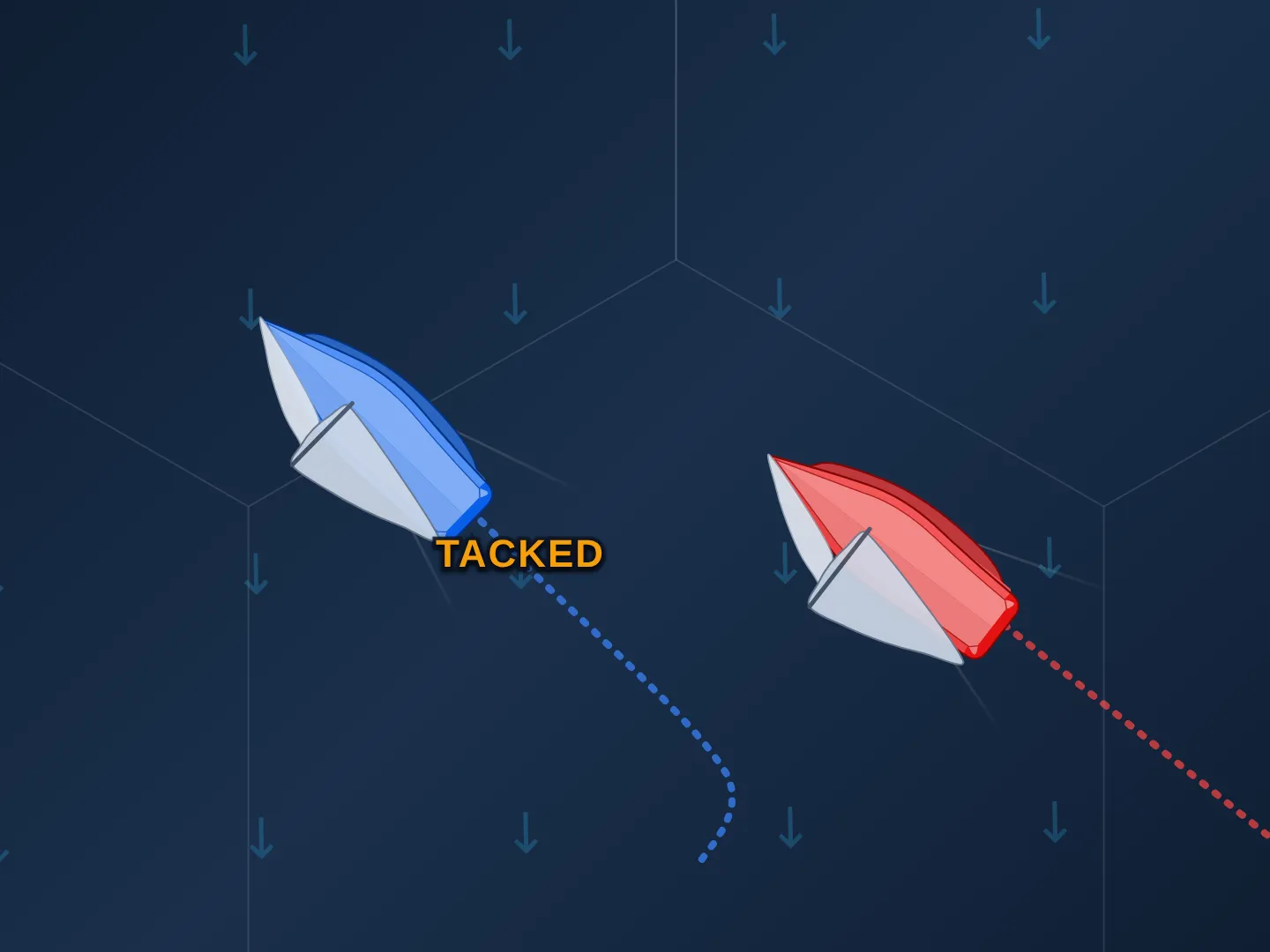
Which side the wind is coming over. Starboard tack means the wind is over the starboard side; port tack means it is over the port side.
knowing your tack tells you instantly who has right of way in a crossing.
Points of Sail
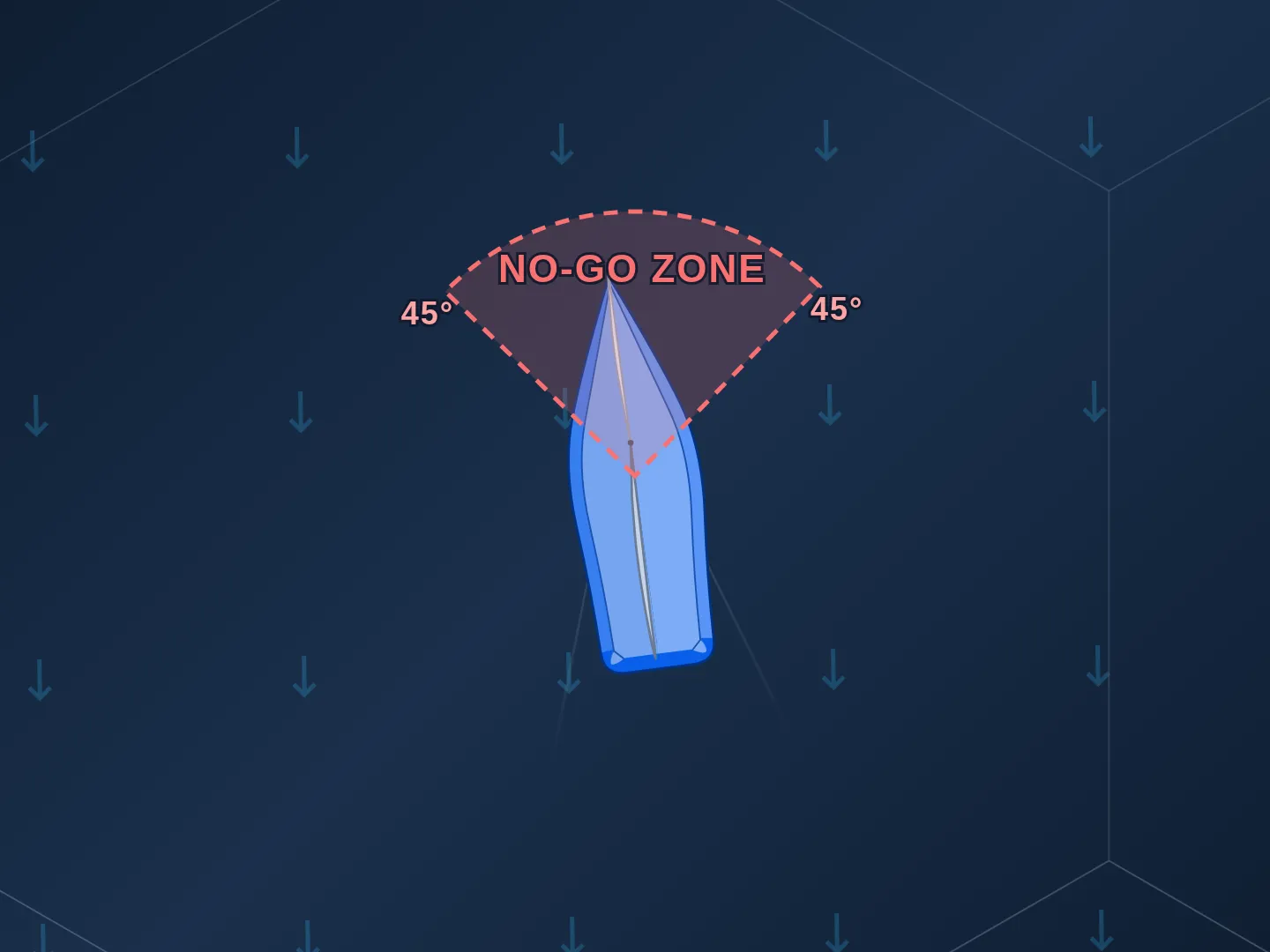
No-Go Zone
The roughly 45-degree wedge straight upwind where a boat cannot make power and the sails just flap.
steer in here and you stall. Bear away to fill the sails and get moving.
Close-Hauled
Sailing as close to the wind as you can while keeping the sails full and the boat moving.
your upwind gear, the angle you hold on every beat to the windward mark.
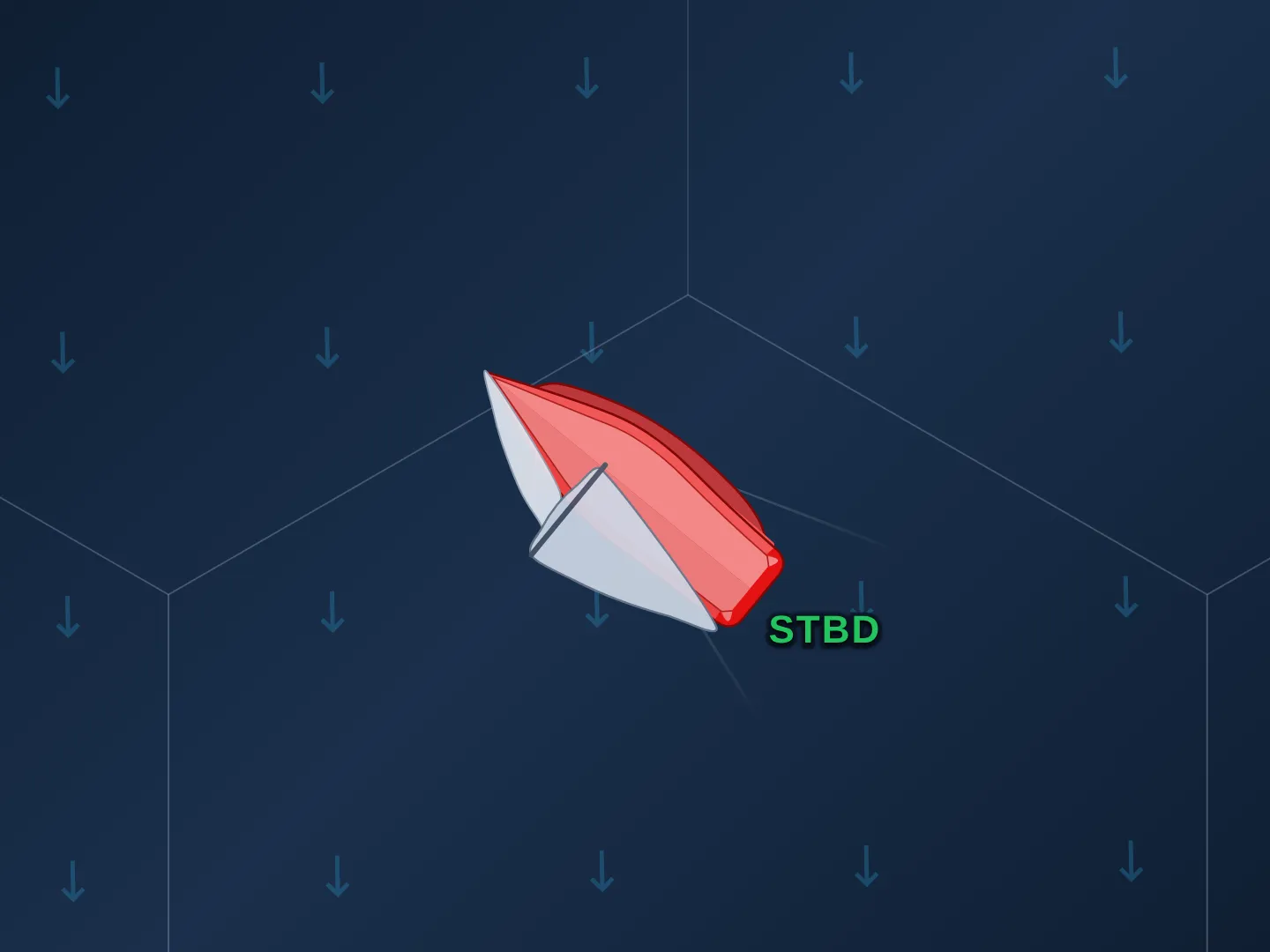
Beam Reach
Sailing with the wind hitting the boat square on the side, at about 90 degrees.
usually the fastest, easiest point of sail.

Broad Reach
Sailing with the wind coming from behind and off to one side.
fast and stable, and where an asymmetric spinnaker really lights up.
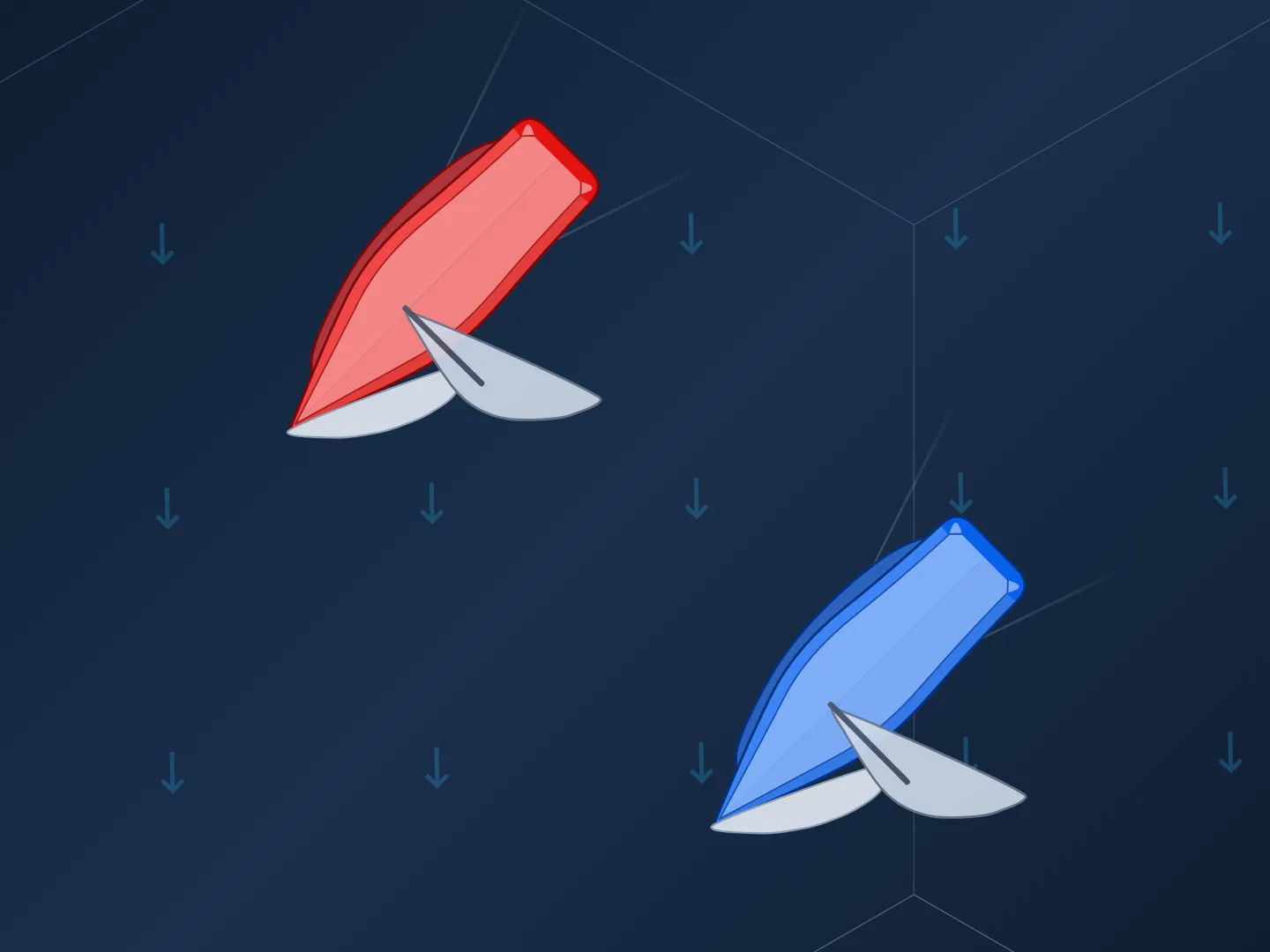
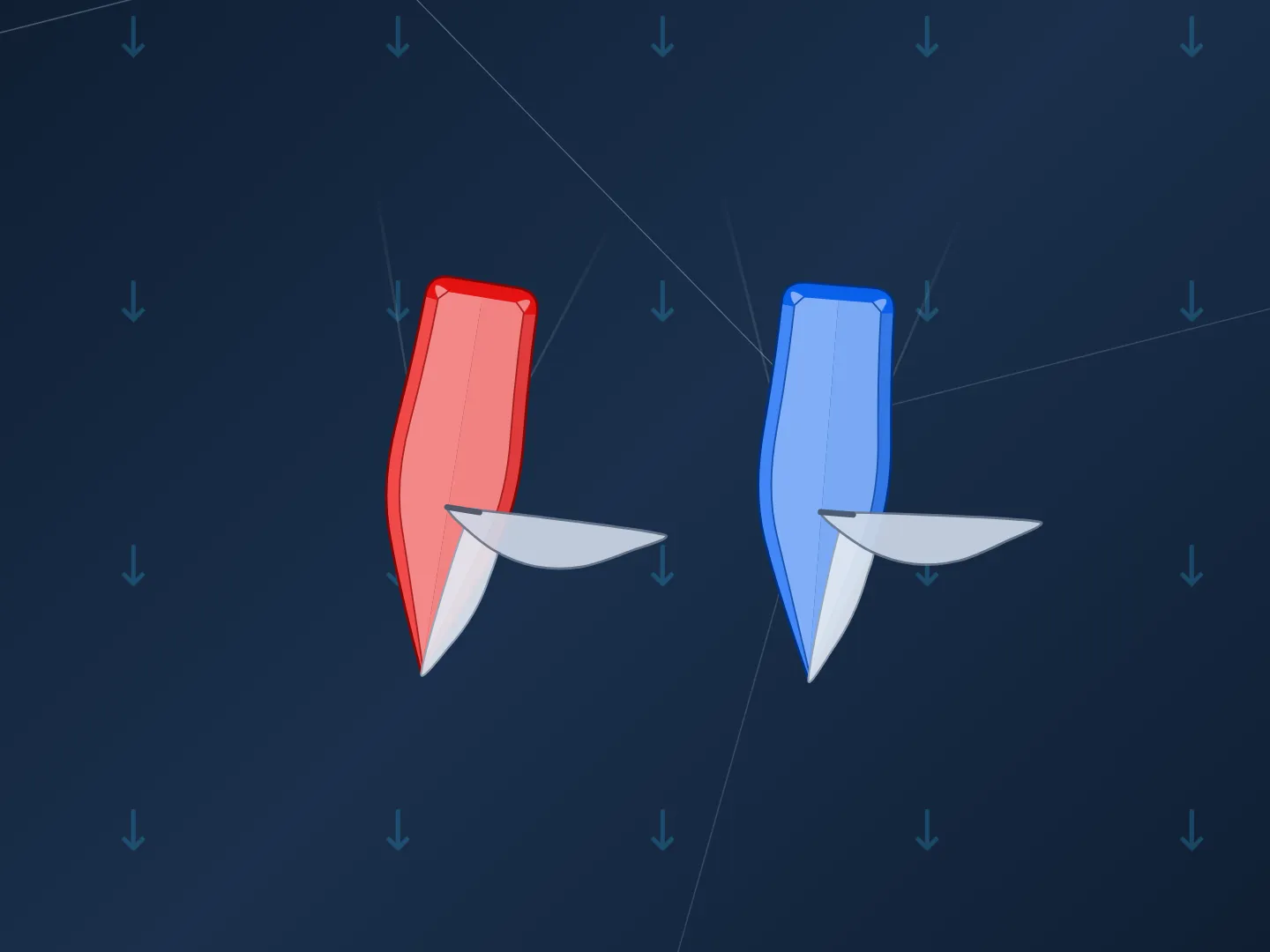
Run
Sailing dead downwind, with the wind straight behind you.
often slower than a broad reach, because the apparent wind drops away.
Reading the Wind
True Wind
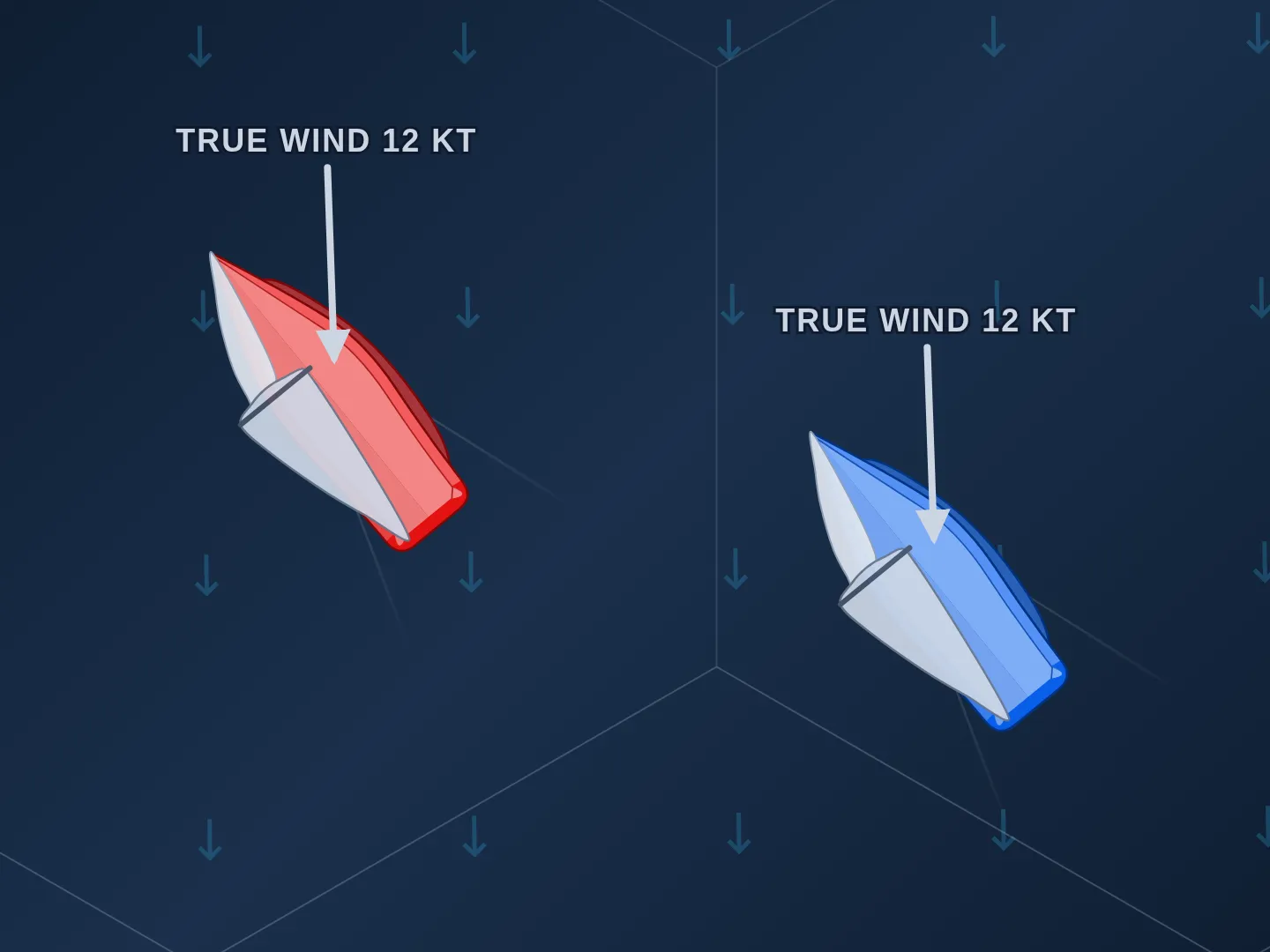
The real wind over the water: the speed and direction you would feel standing still.
this is what the weather is doing, no matter how fast you sail.
Apparent Wind
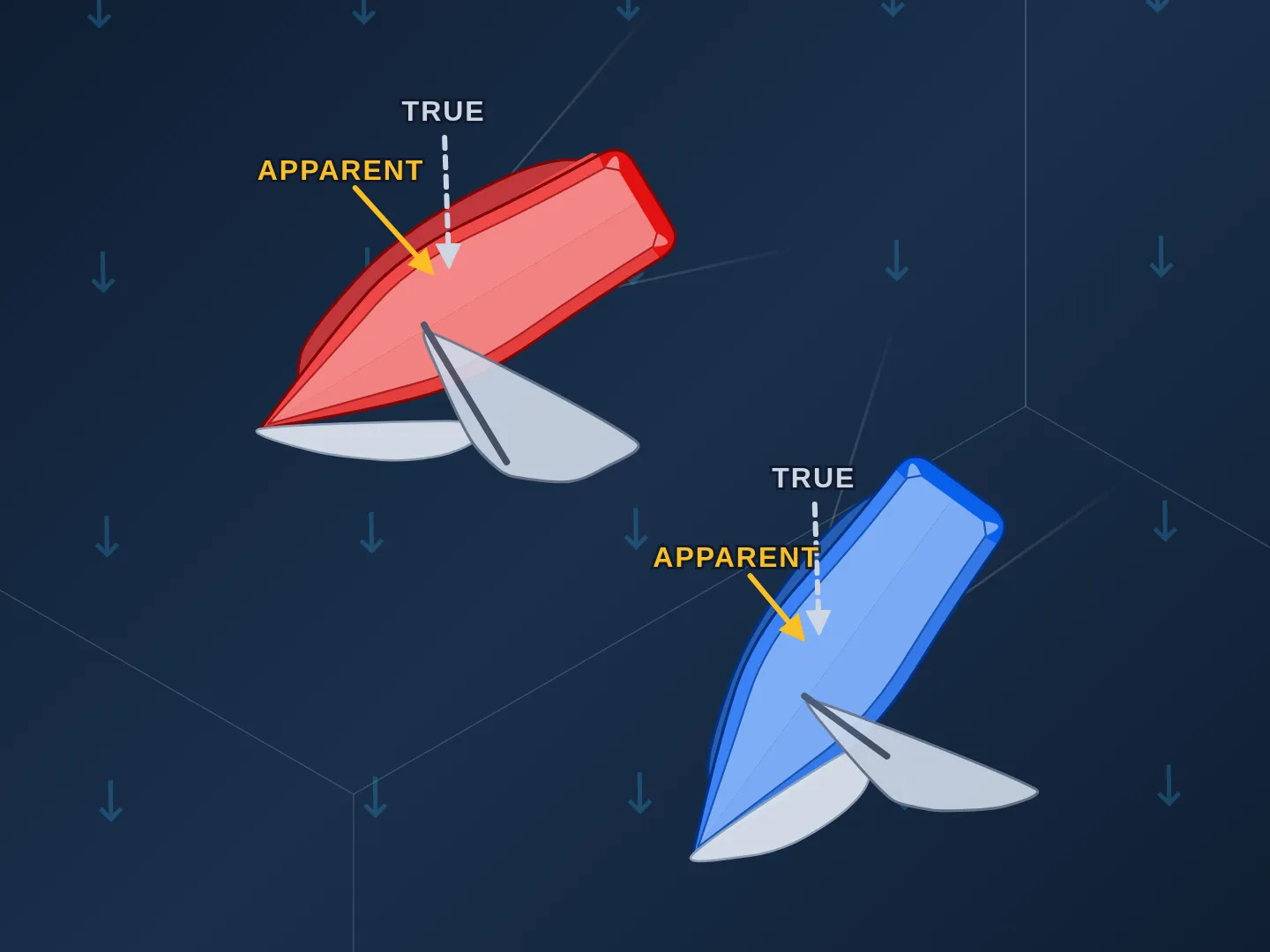
The wind you actually feel on a moving boat, a blend of the true wind and the wind your own motion creates.
it shifts forward as you speed up, which is why you trim in as you accelerate.
Header
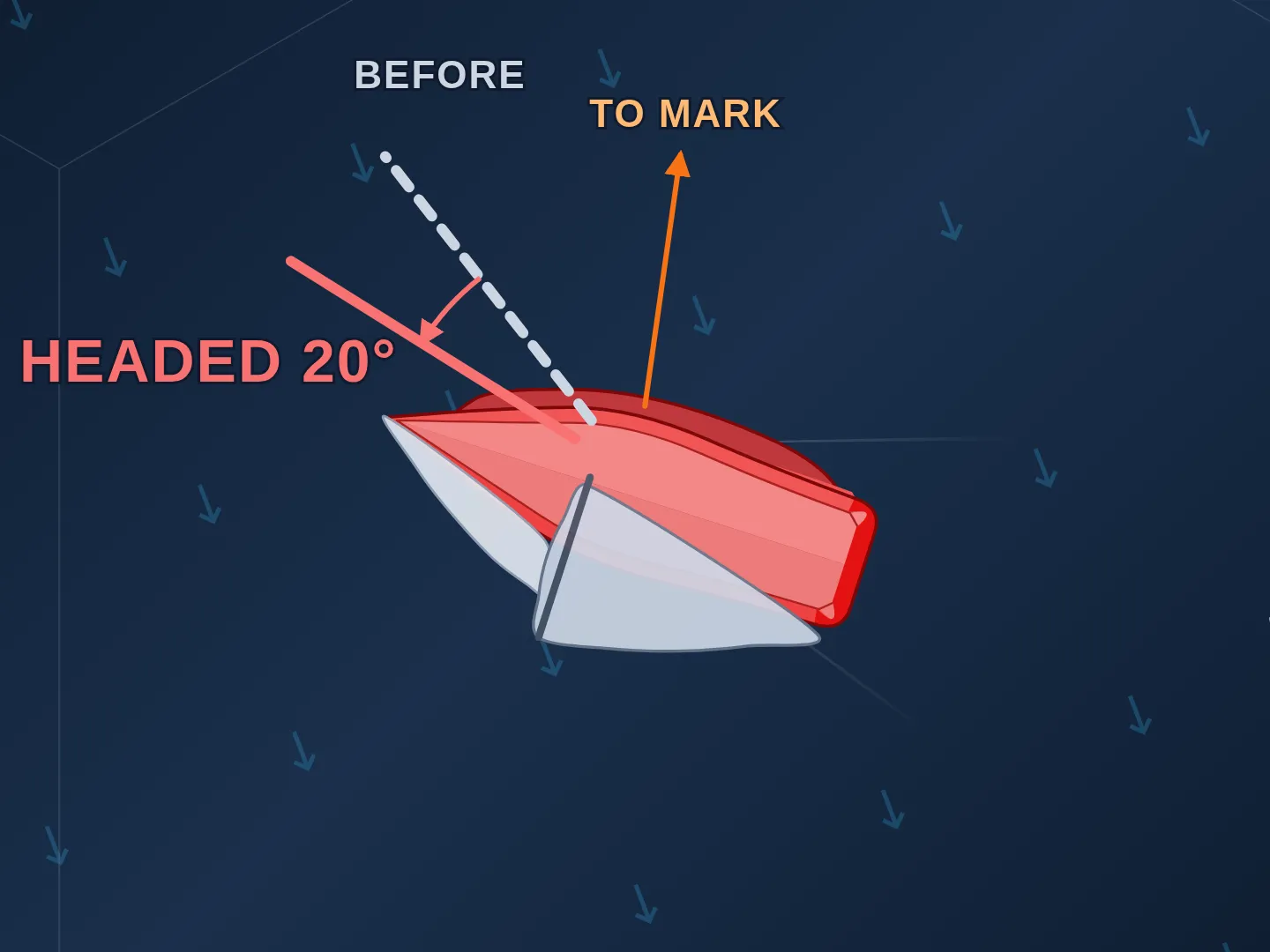
A wind shift that swings against you and forces you to steer away from the mark.
get headed and it is often the cue to tack onto the lifted side.
Lift
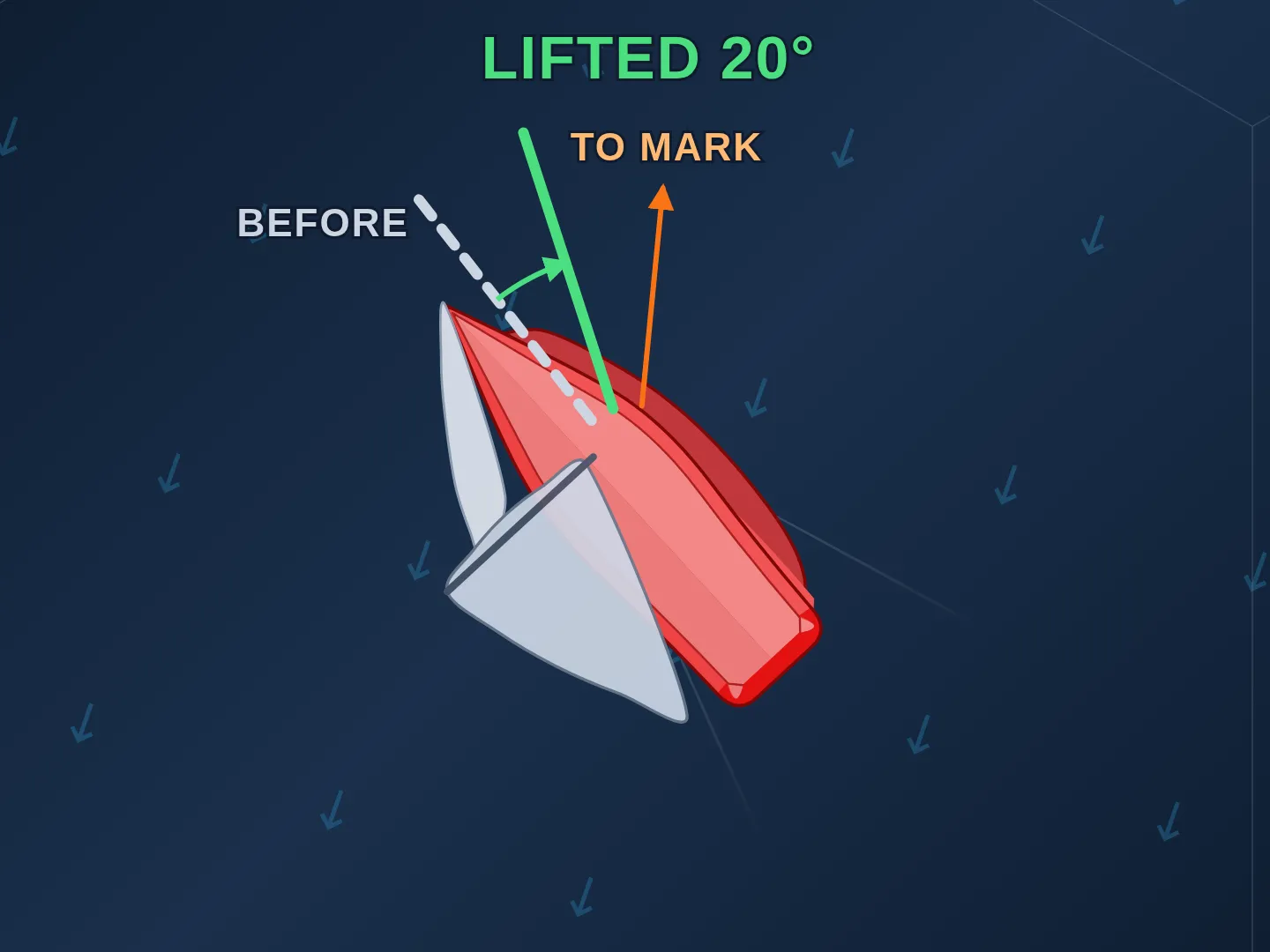
A wind shift that lets you point closer to the mark without changing course.
a free shortcut. Stay on the lifted tack and ride it.
Puff
A patch of stronger wind moving across the water, often visible as a dark ripple.
spot them early and use them to accelerate.

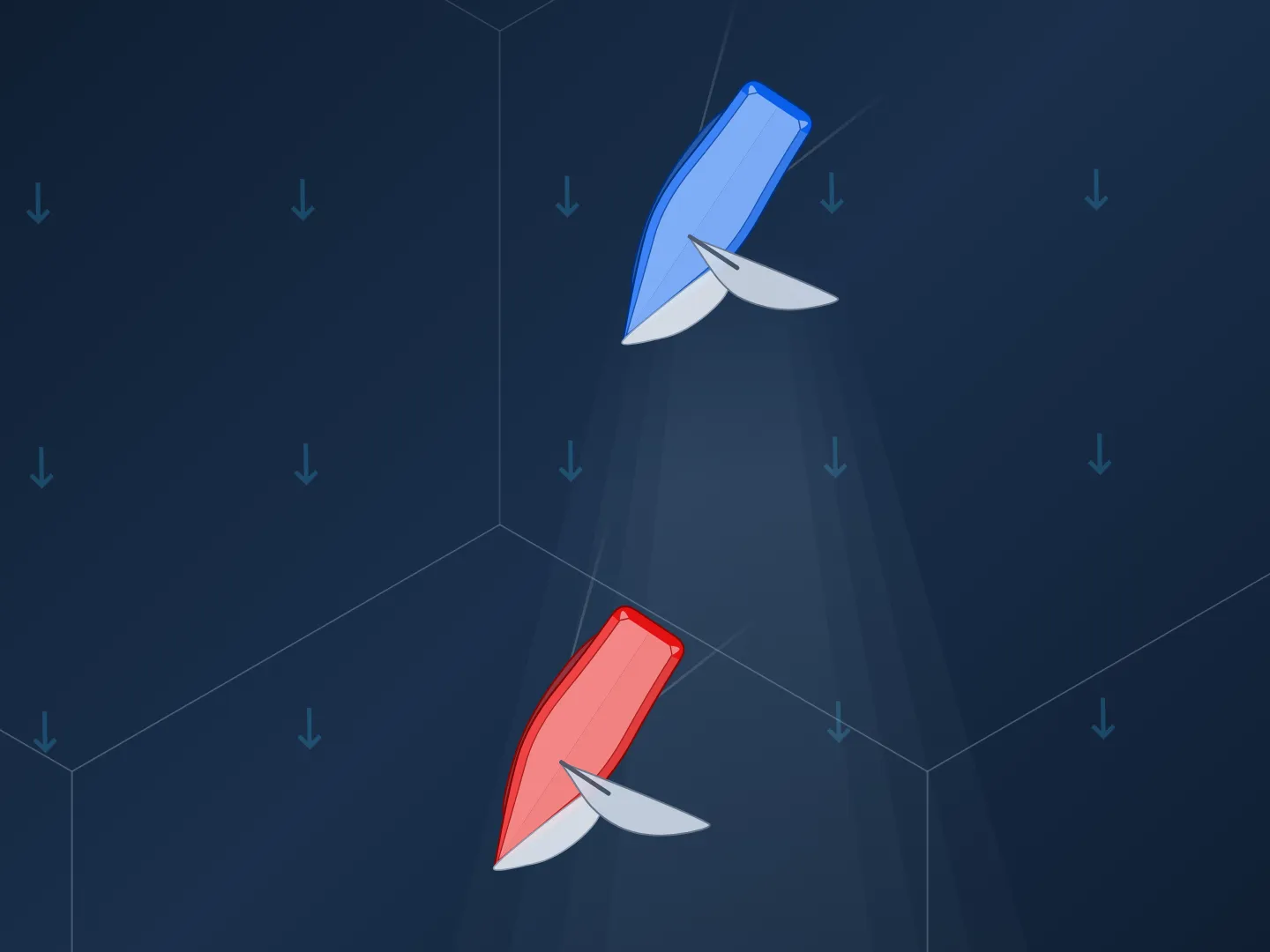
Wind Shadow
The patch of disturbed, slower air a boat leaves downwind of its sails.
park a rival in your shadow to slow them, and stay out of everyone else's.
Speed & Tactics
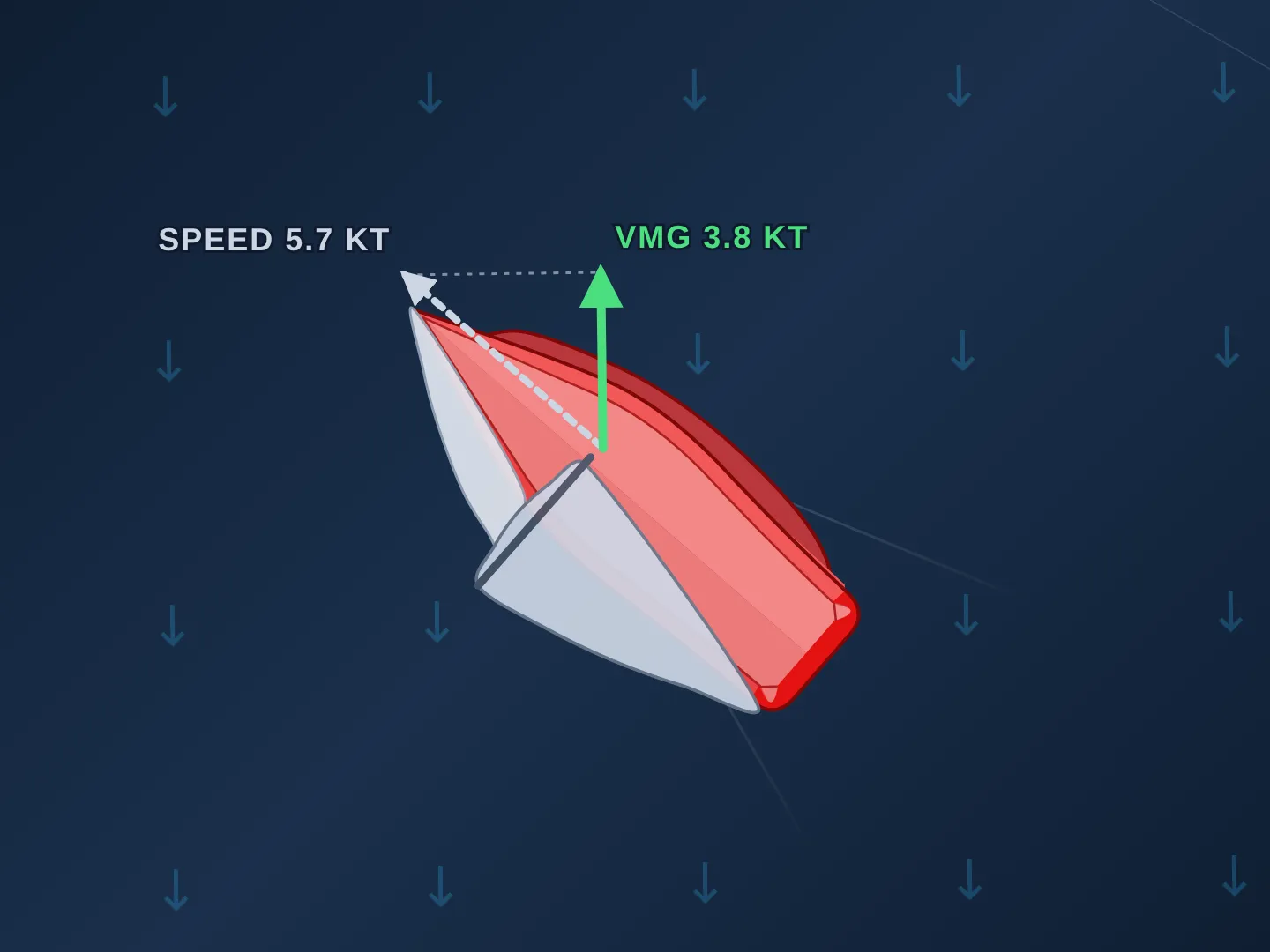
VMG
Velocity Made Good: how fast you are actually closing on the next mark, once your sailing angle is taken into account.
fast in the wrong direction loses to slower and pointed right. The HUD shows it live.
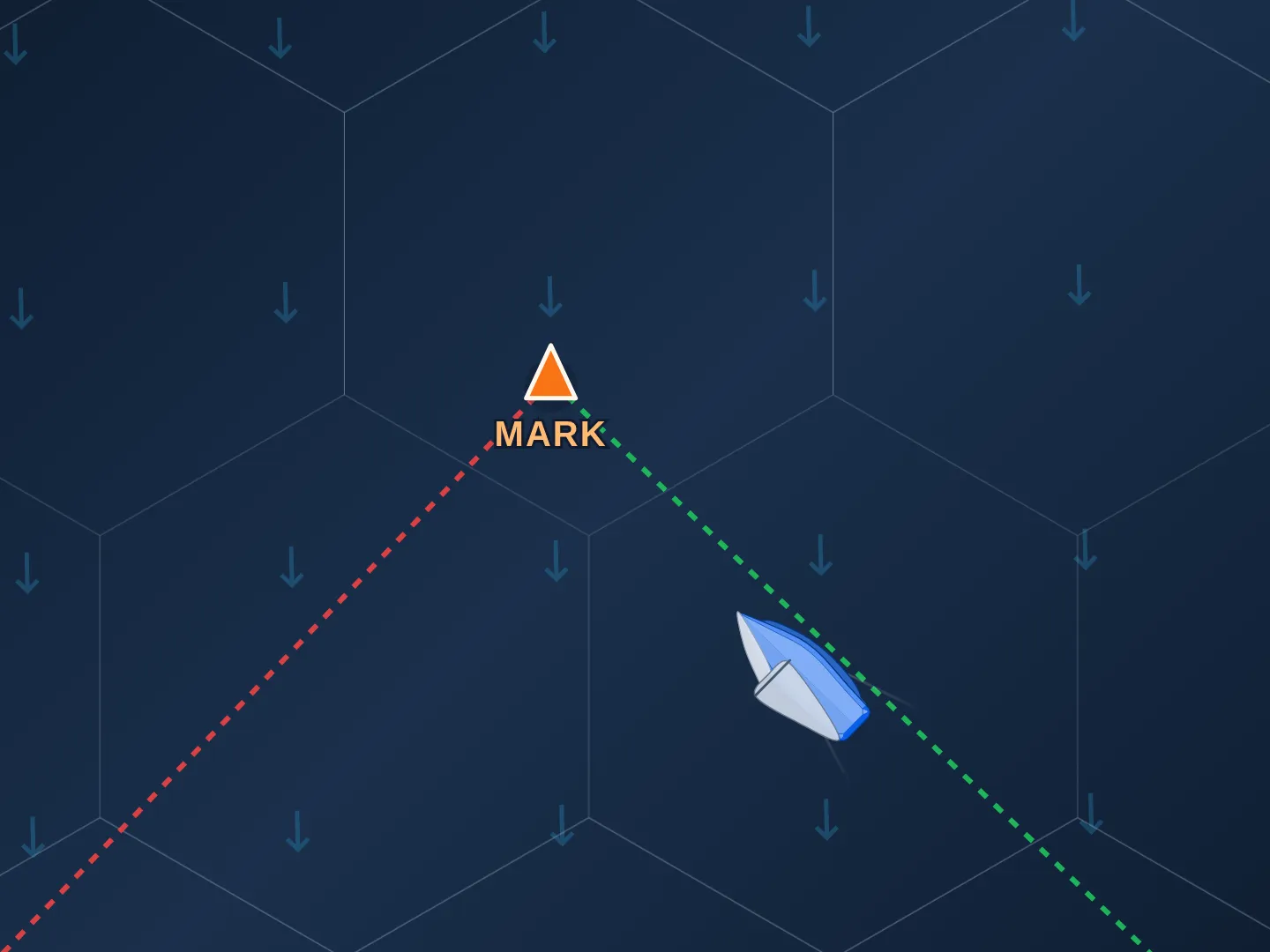
Layline
The line you can sail straight to a mark on your current tack without tacking again.
hit it too early and you overstand, sailing extra distance for nothing.
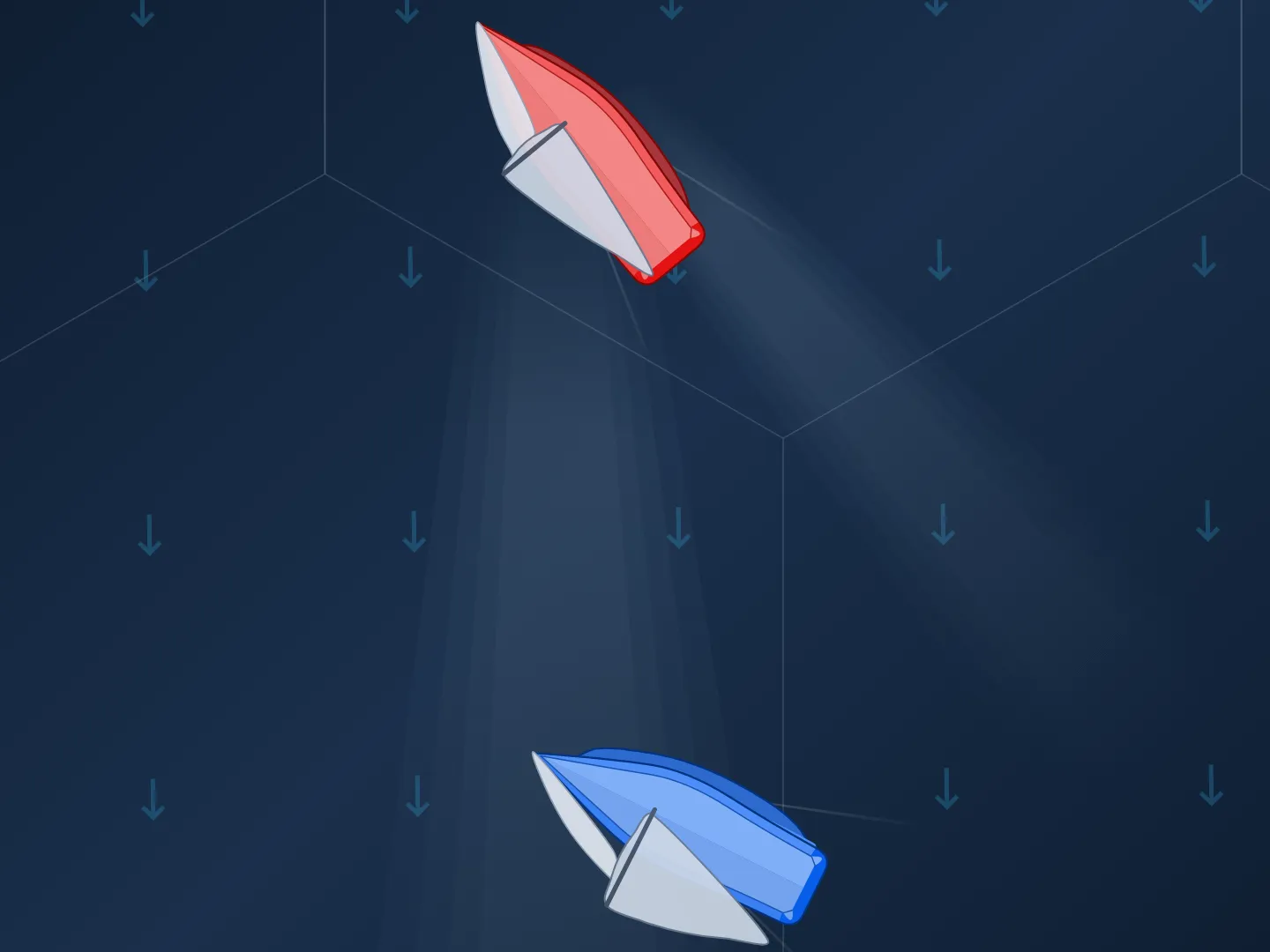
Dirty Air
Turbulent, slowed air in the wake of another boat's sails.
sit directly behind someone and your speed bleeds away. Find a clear lane.
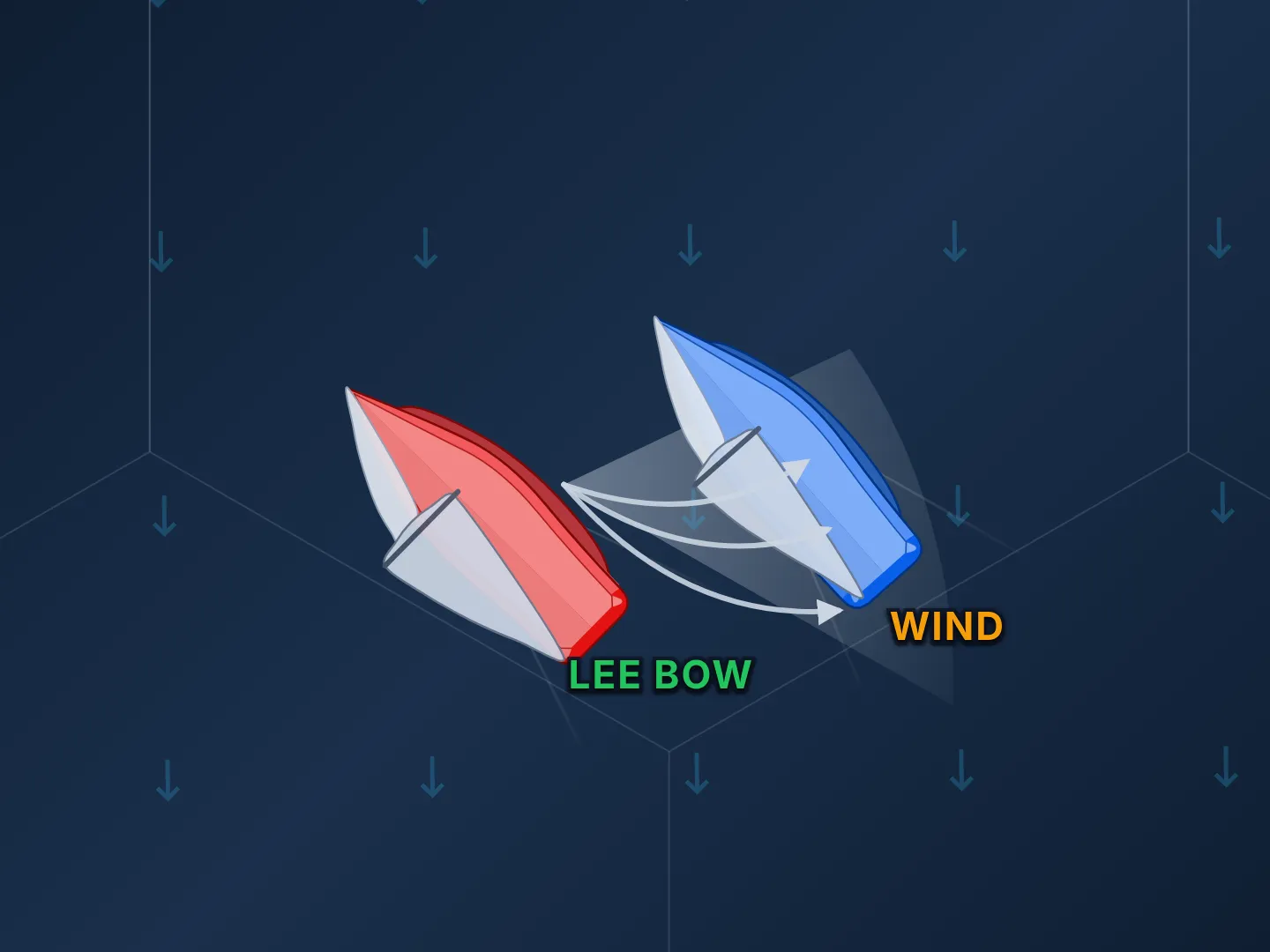
Lee Bow
Tacking just ahead and to leeward of a rival so your bad air blows back over their sails.
one of the strongest attacking moves upwind. It forces them to tack away.
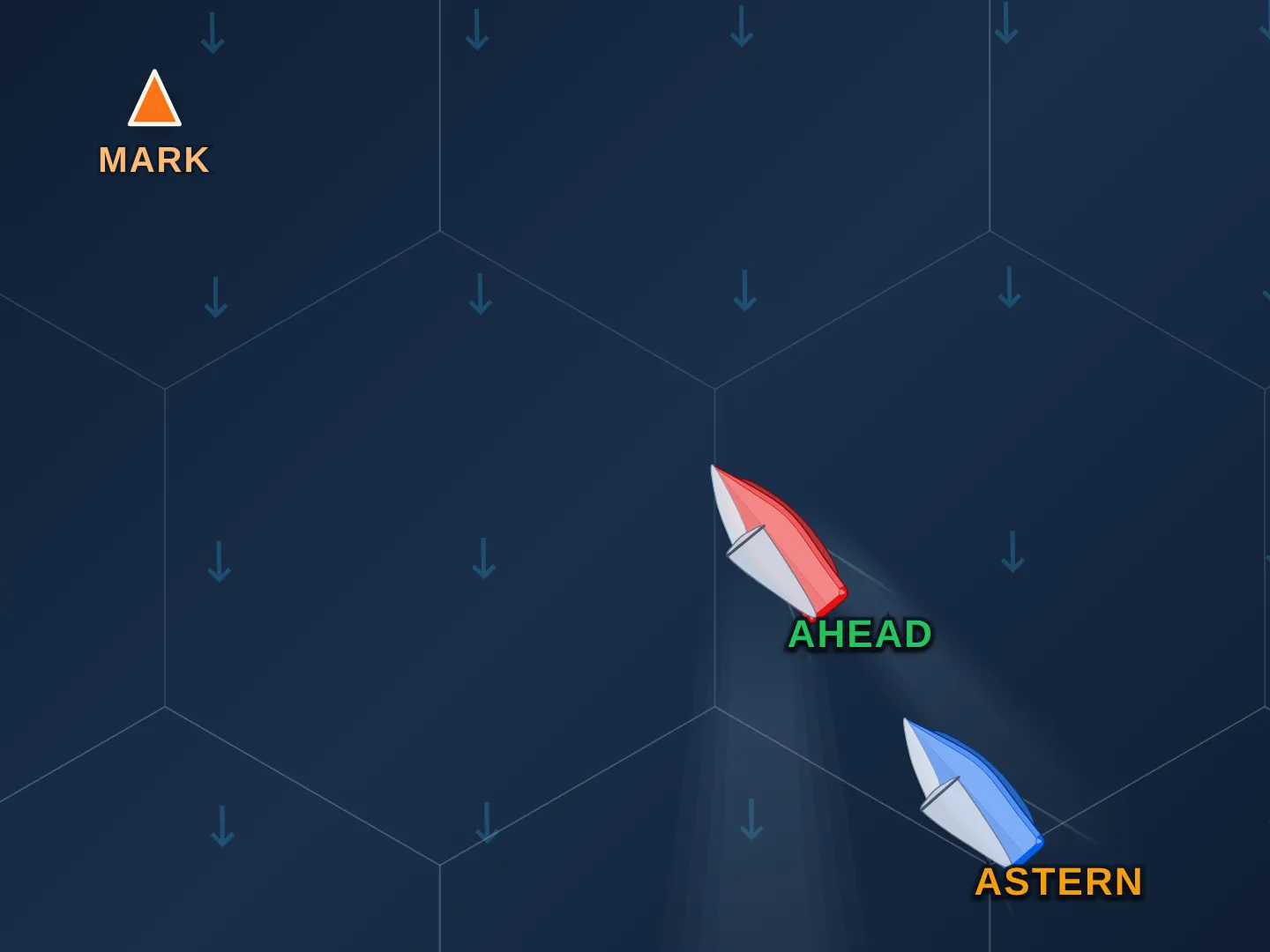
Covering
Staying between a rival and the next mark, or the wind, to keep yourself ahead.
the classic move when you are leading and want to stay there.
The Rules
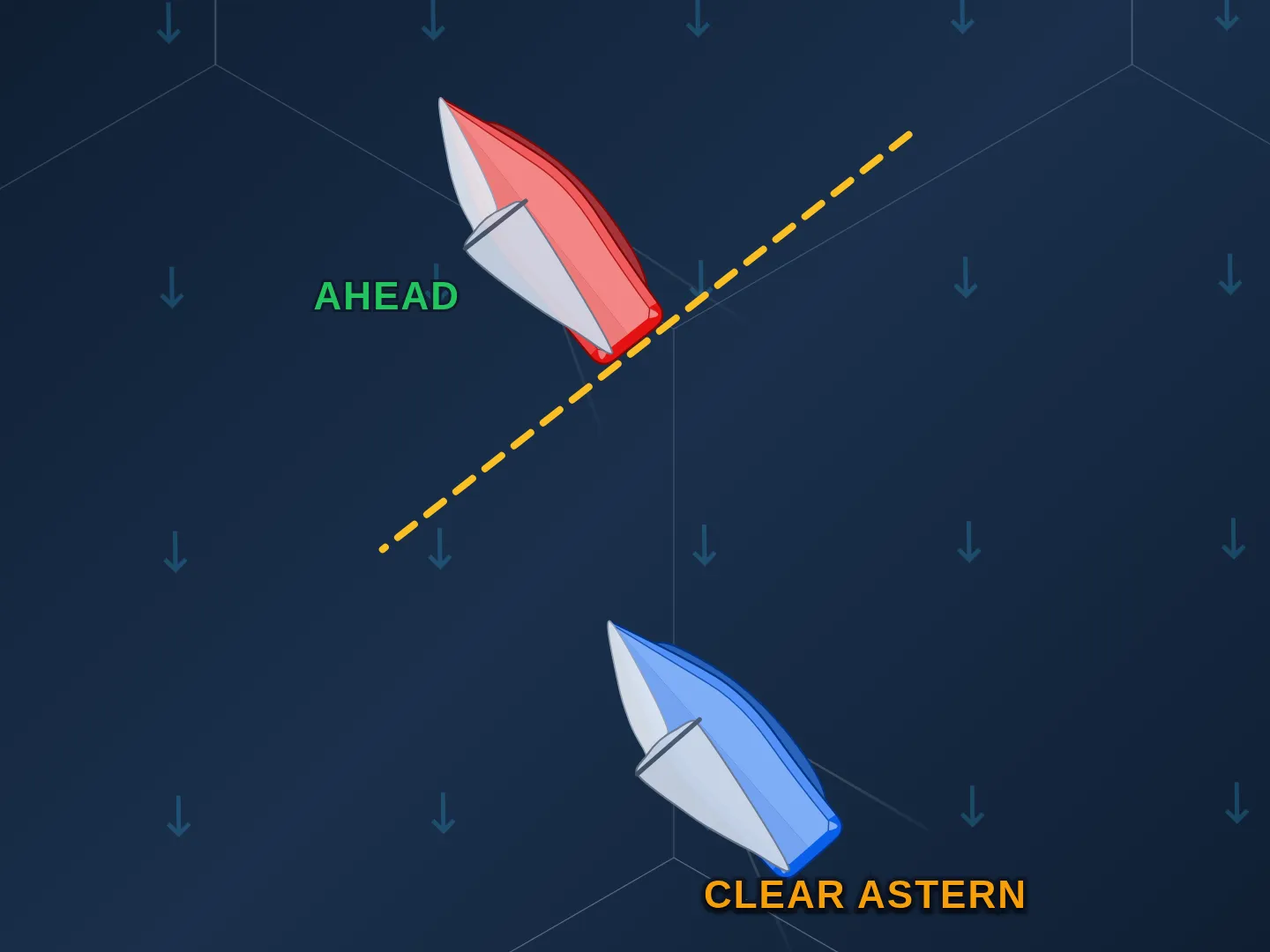
Clear Astern
A boat is clear astern when she's entirely behind a line square across the stern of the boat ahead.
on the same tack and not overlapped, the boat catching up from behind has to keep clear (rule 12).
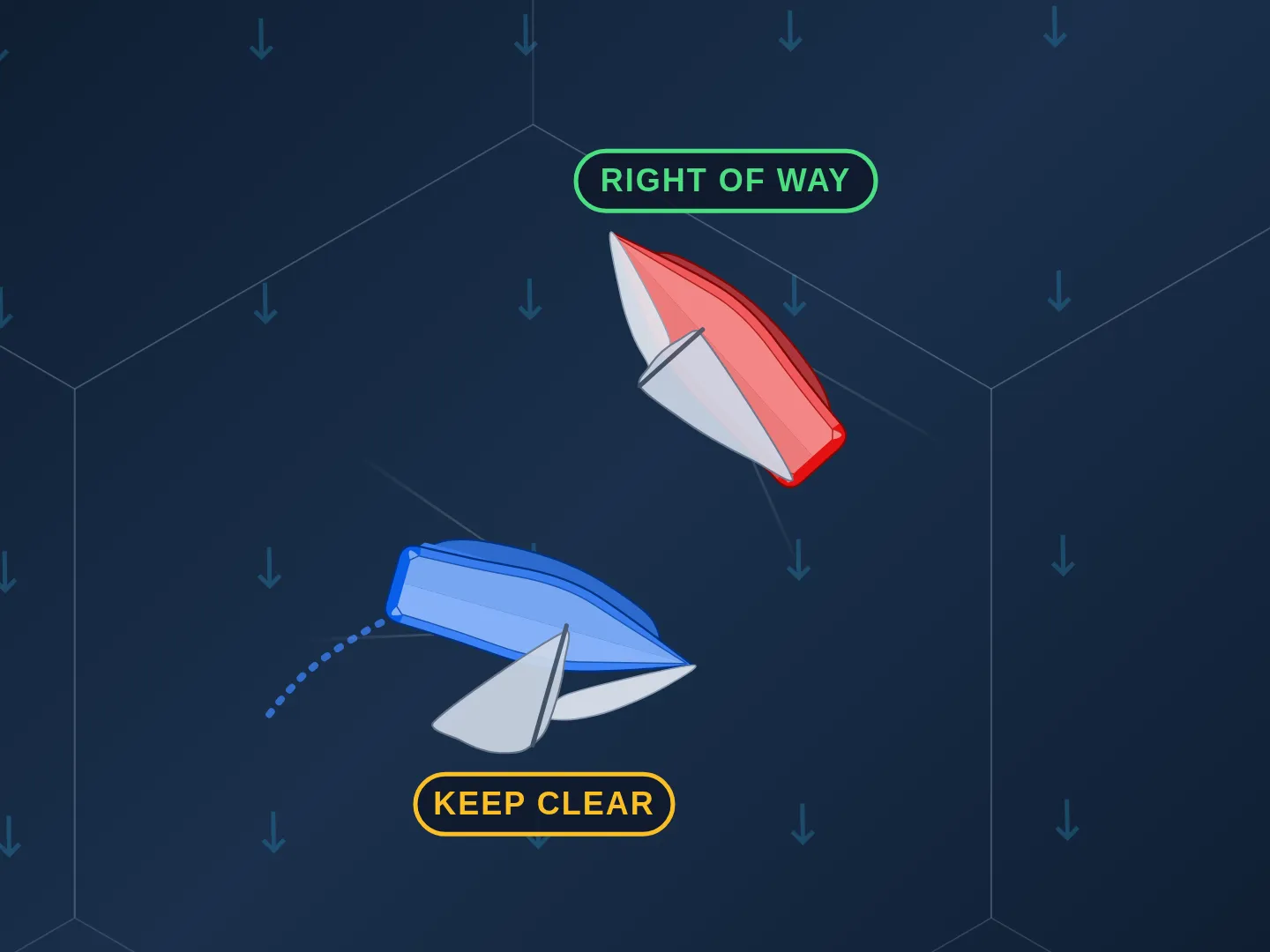
Right of Way
The boat with rights holds its course; the other boat has to keep clear.
starboard over port, leeward over windward. The whole fleet sails by it.
The Zone
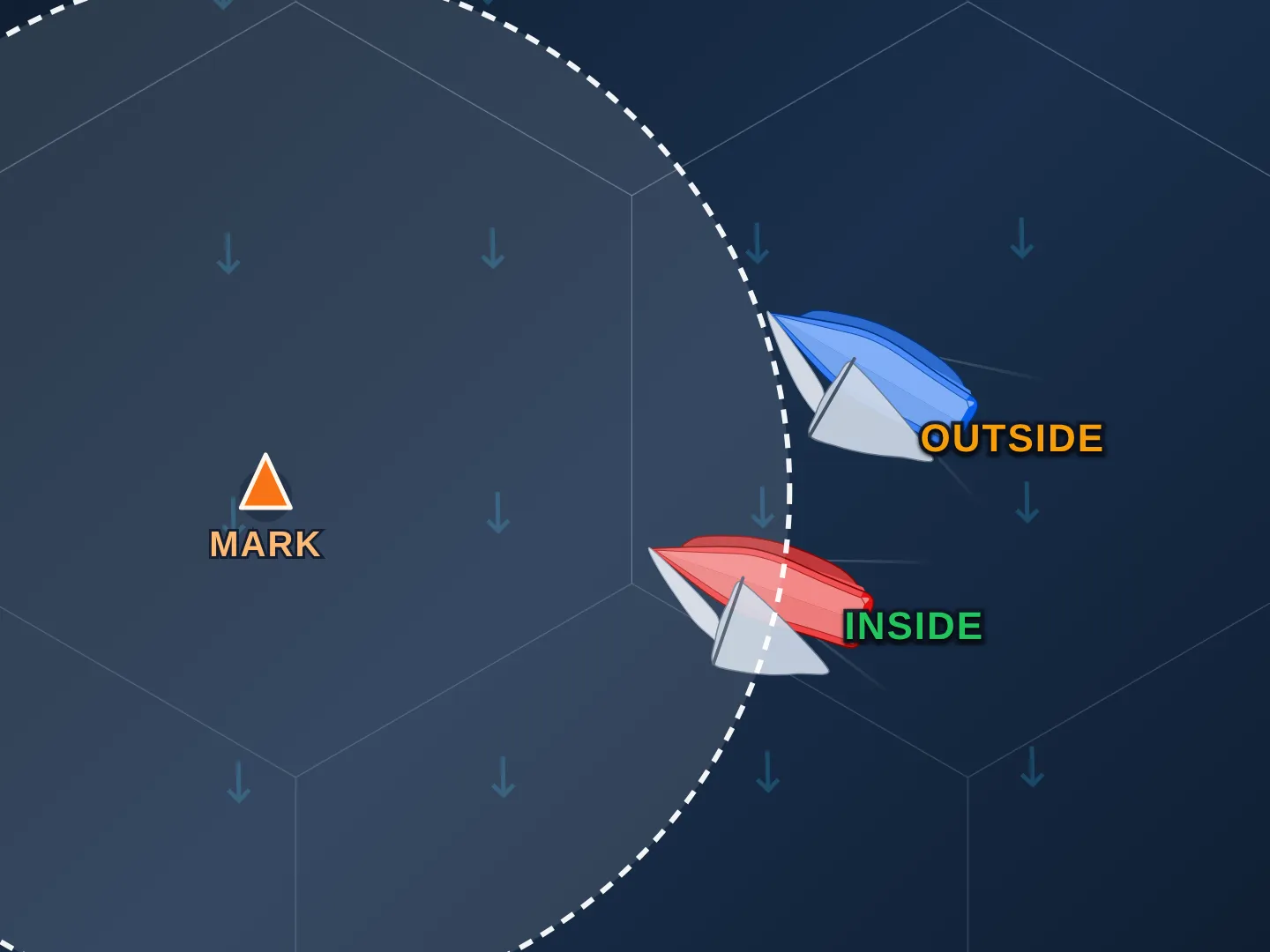
The circle three boat lengths out from a mark, where mark-room rights lock in.
whether your bow is ahead of a rival's the moment you reach it decides who gets room.
Mark-Room
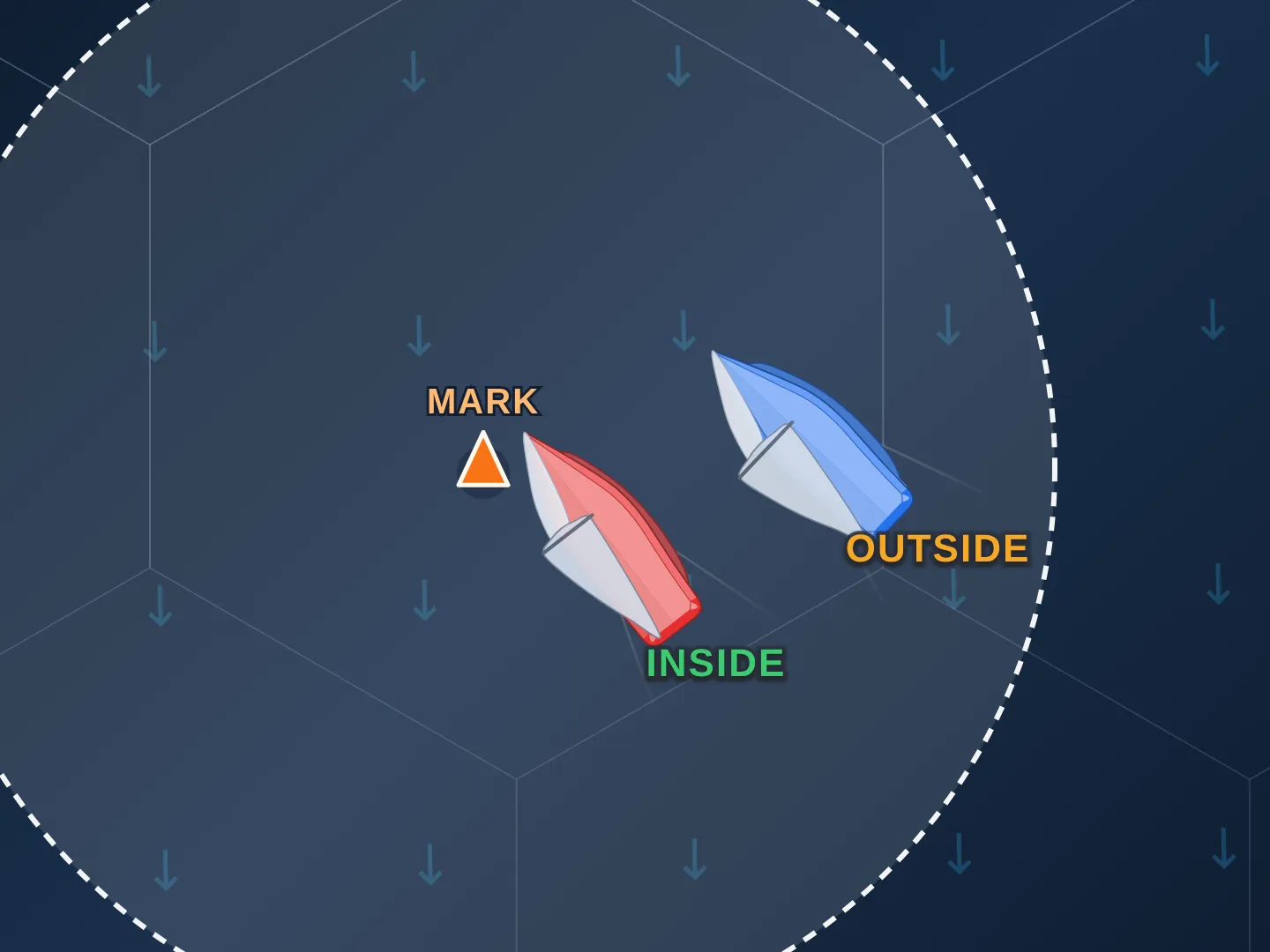
The room an inside boat is owed to round a mark, if it had the overlap entering the zone.
win the overlap early and you can lock a rival out of the rounding.
OCS
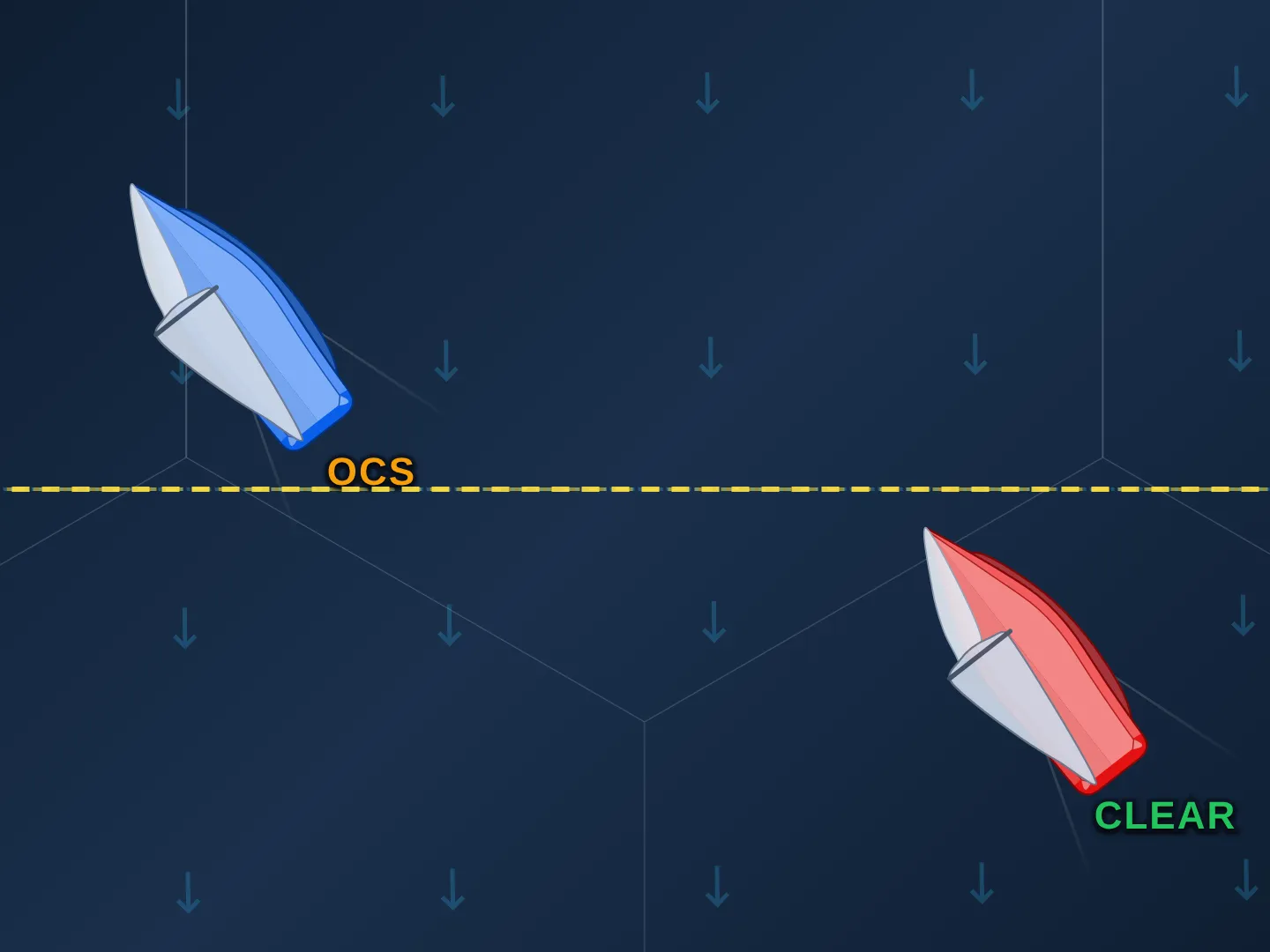
On Course Side: over the start line early, before the gun.
you have to dip back and restart, which can cost you the whole first leg.
Penalty Turn
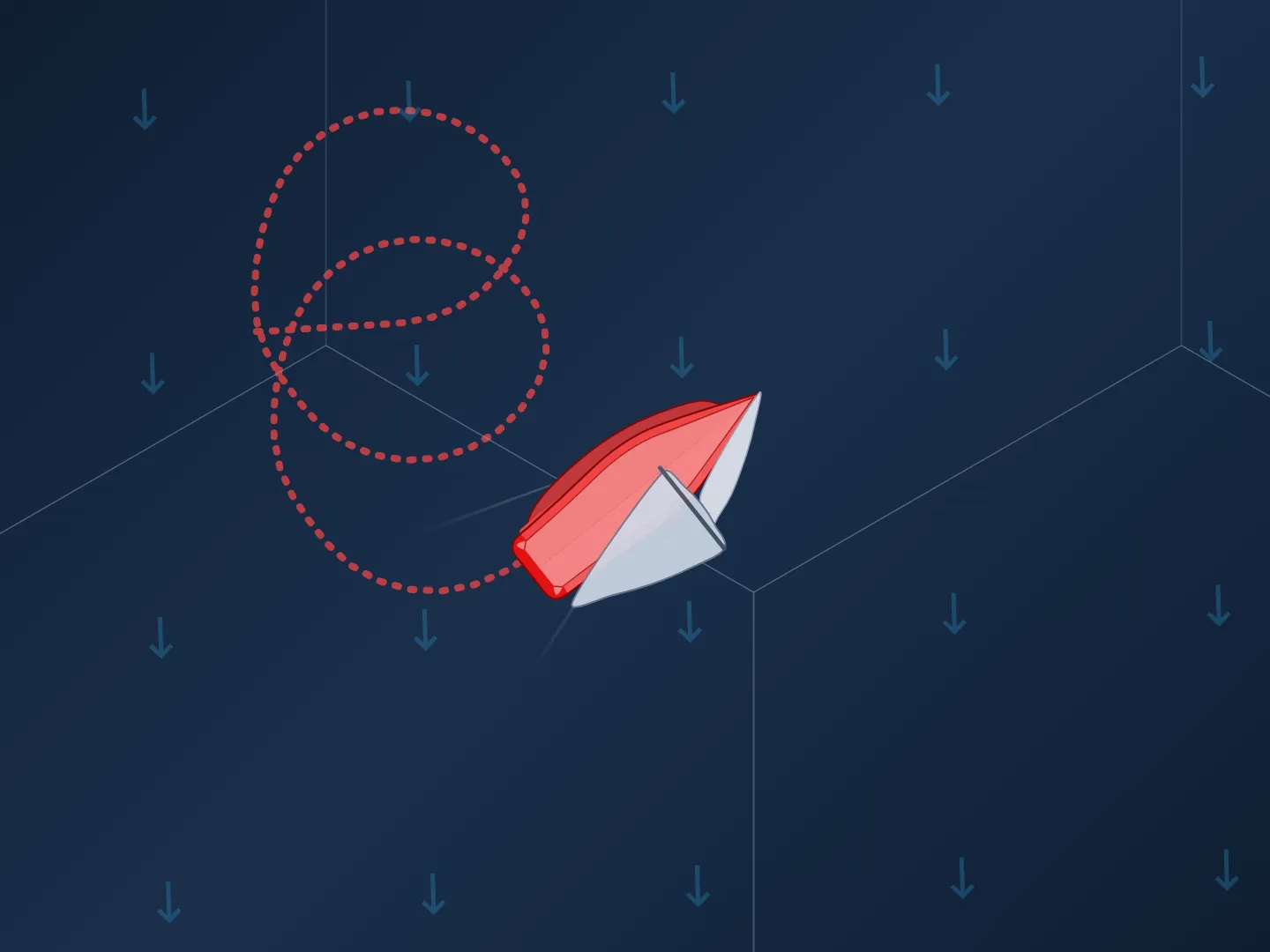
A spin of the boat, one or two full turns, taken to clear a foul instead of being scored out.
costs a few boat lengths, far cheaper than a disqualification.
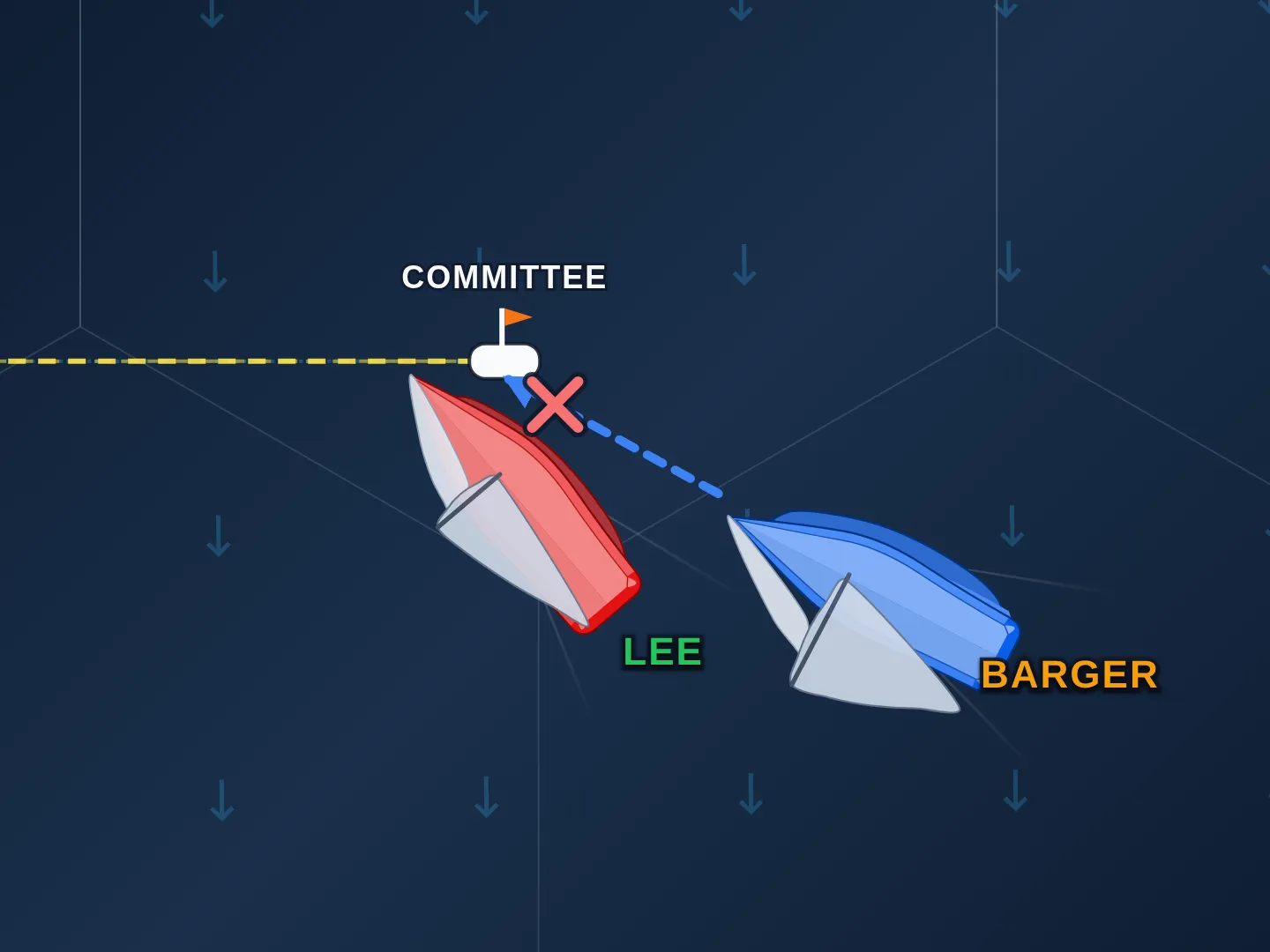
Barging
Trying to force in at the committee-boat end of the start line with no room and no right to it.
almost always ends in a foul. Do not be that boat.
Learn them by sailing them.
Reading is one thing. Calling for room at the zone with three boats on your hip is another.
Start a Quick Race