Upwind Strategy: Wind Shifts, Lifts and Puffs
Upwind strategy is choosing which way to go to reach the windward mark sooner. In a breeze that swings back and forth, the rule of thumb is simple: sail the lifted tack, and tack when you get headed. Do that each time the wind swings and you stay in phase, pointing closer to the mark on every tack.
Strategy and tactics
Coaches split racing in two. Strategy is you against the course: the wind, its shifts and puffs, and which side pays. Tactics is you against the fleet: covering, lee-bowing and staying out of dirty air. Get the strategy right first. A boat on the right shift beats a boat with the right move on the wrong one.
Lifts and headers
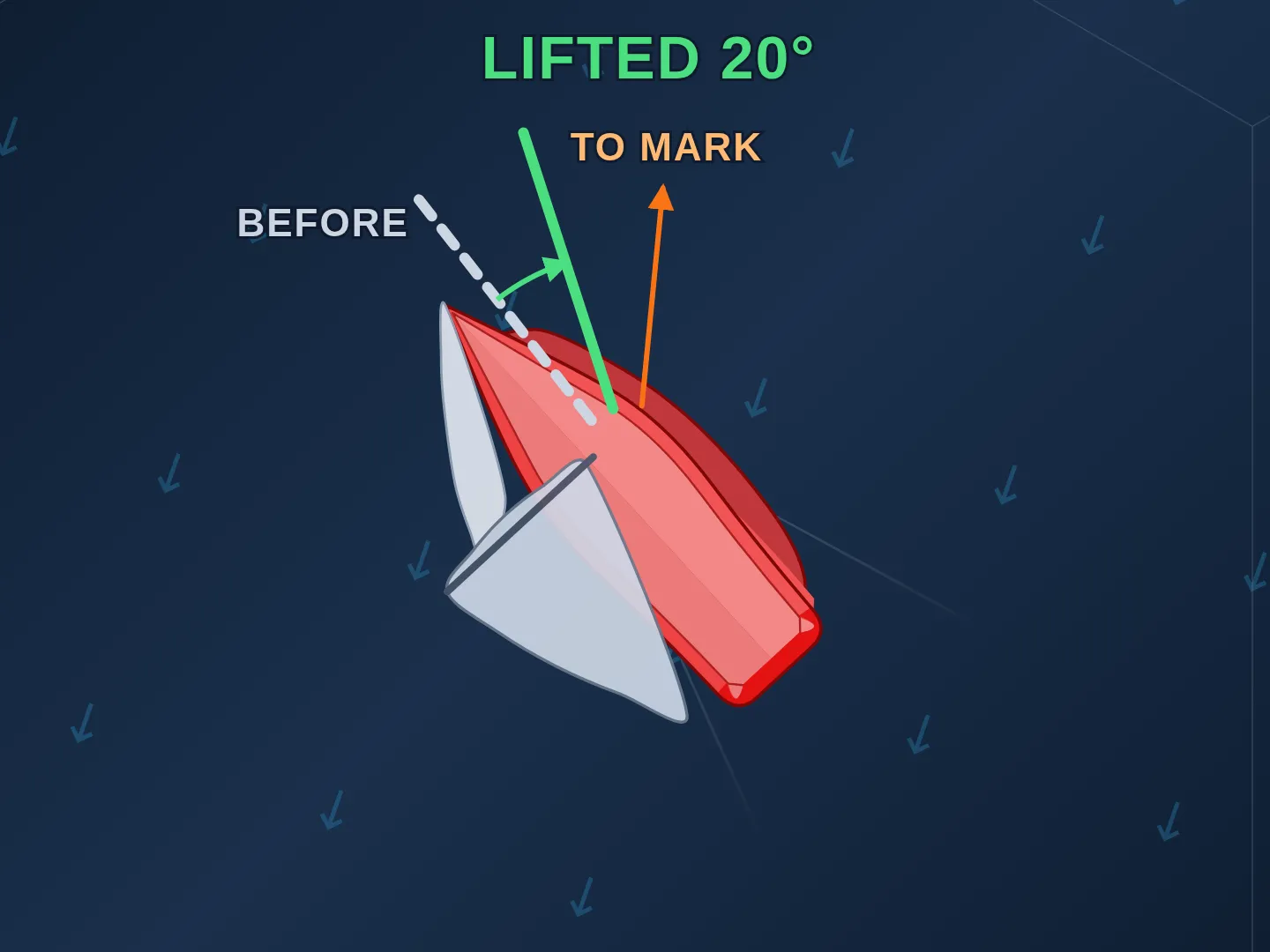
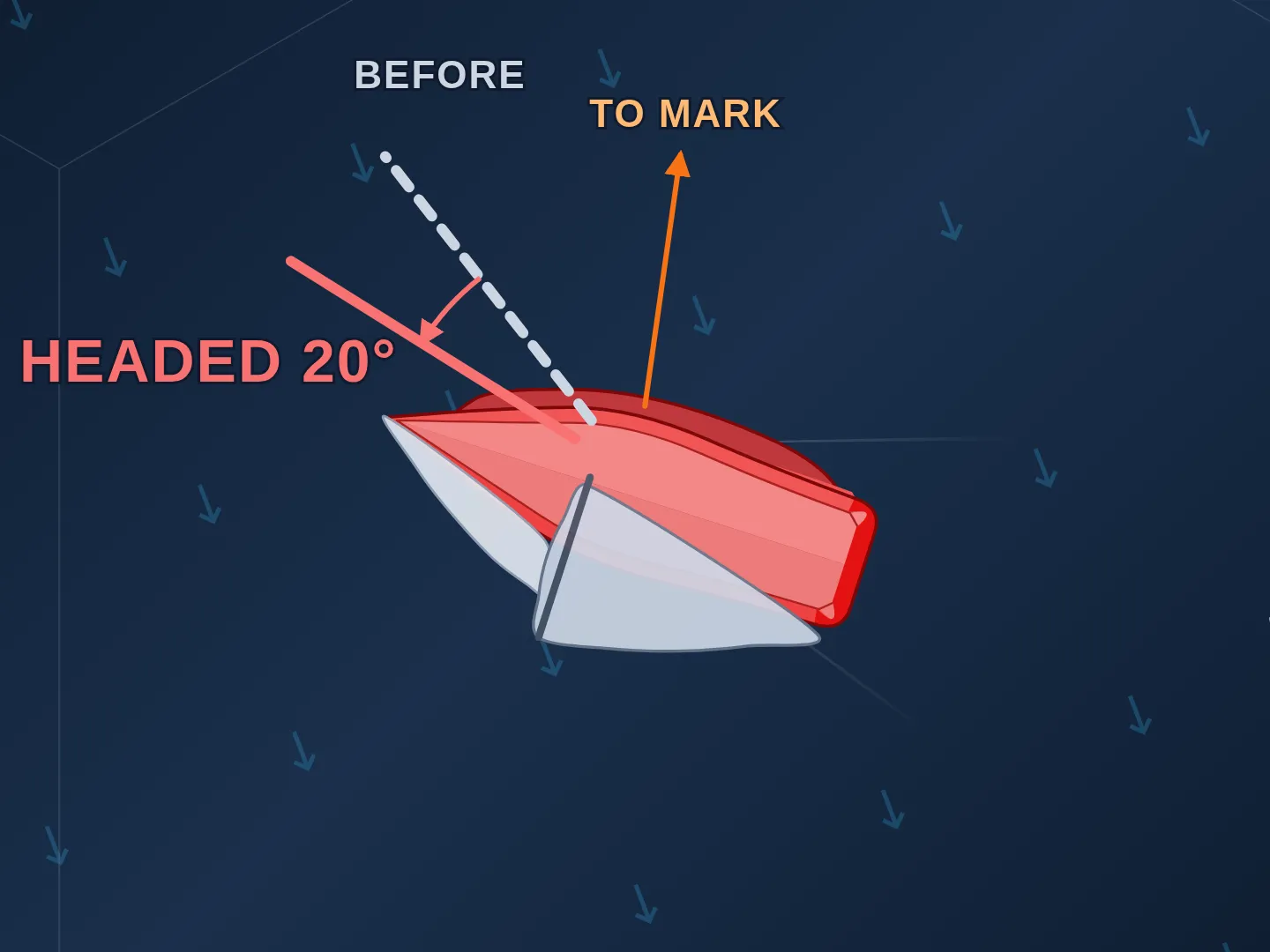
You sail upwind close-hauled, at a fixed angle to the wind. When the wind swings, your course swings with it. A lift turns you toward the windward mark, so the same angle points you closer to it. A header turns you away from it.
Every shift is a lift on one tack and a header on the other. That is the whole game upwind: be on the tack the shift lifts.
Tack on the header
When the wind heads you, the other tack is now lifted. Tack, and you point closer to the mark than you were before the shift. Ride that lift until the wind swings back and heads you again, then tack again. Sailors call this staying in phase.
A tack costs distance, so do not tack on every flicker. Wait until the header is real: a few degrees, and holding. Then go.
Oscillating and persistent shifts
An oscillating breeze swings back and forth around an average direction. Tacking on the headers works best here, because every header is followed by a lift on the other tack.
A persistent shift keeps turning one way, as a sea breeze filling in can. Tacking on the first header does not pay, because the wind is not coming back. Sail toward the side the wind is turning to, and accept being headed early to be inside the turn later.
Most days are some of both. Watch the compass or the shore for a few minutes before the start, and note the highest and lowest headings you see on each tack. That range tells you which kind of day it is.
The new wind arrives at the top first
A shift reaches the boats nearest the windward mark before it reaches you. Watch the boats ahead and to windward. When their angle changes, or they tack together, the same wind is on its way down to you.
Puffs: more wind, often a shift
A puff shows as a dark patch moving across the water. More wind means more speed and better pointing, so sail toward puffs on the beat.
A puff often carries a shift. Sail into one, check whether it lifts or heads you, and use the same rule: stay on a lift, tack on a header.

Clear air comes first
A good shift is worth less if you sail it in another boat's wind shadow. Before you tack on a header, look where you will land. If the tack puts you in dirty air behind or just to leeward of another boat, wait a few lengths or take the header for a moment.
Stay off the laylines
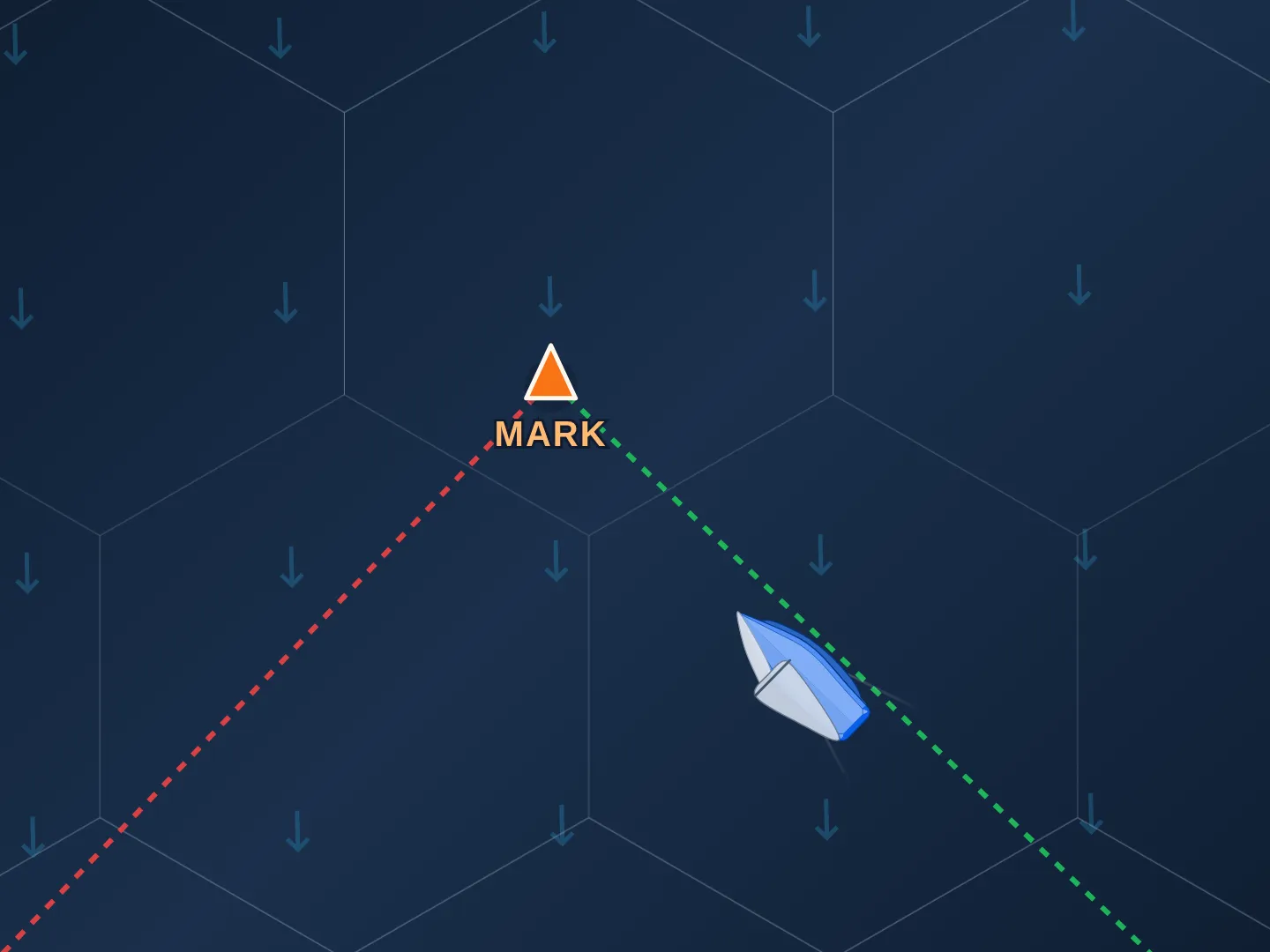
A layline is the line you can sail straight to the mark on. Reach it early and you have no options left: every shift is either useless or costs you, and a lift means you have overstood.
Work the middle of the course on the shifts, and come into a layline late, close to the mark.
How SailMOB models it
In a SailMOB race at the default settings, the breeze swings about 8 degrees either side of its average, a full cycle every 2 to 3 minutes. The swing travels down the course, so the boats near the windward mark get it about 25 seconds before the start line does.
The HUD reads it for you. LIFTED or HEADED compares the wind now with its average over the last minute, on the tack you are sailing. A PUFF row shows where the next puff is, and whether the one you are in lifts or heads you. On a phone, tap the instrument card to show the shift row.
Questions
What is the difference between a lift and a header?
A lift is a shift that lets you point closer to the mark on your current tack. A header forces you to steer further from it. The same shift lifts one tack and heads the other.
Should you always tack on a header?
In an oscillating breeze, usually yes, once the header is real and holding. Not if you are near the layline, if the tack lands you in dirty air, or if the shift is persistent and the wind is not coming back.
What is an oscillating wind shift?
A breeze that swings back and forth around an average direction, often on a cycle of a few minutes. Tacking on each header keeps you on the lifted tack.
What is a persistent wind shift?
A shift that keeps turning one way, such as a sea breeze filling in. The side of the course the wind turns toward pays, so sail toward it first.