Rule 31: Touching a Mark
Rule 31 of the Racing Rules of Sailing 2025-2028 says a boat that is racing must not touch a mark: a starting mark before she starts, a mark of the leg she is on, or a finishing mark after she finishes. Touch one and you can clear it with a One-Turn Penalty, unless the sailing instructions say otherwise.
The penalty is one turn, with one tack and one jibe, taken promptly once you are well clear of other boats (rules 44.1 and 44.2). It costs a few boat lengths. Sailing on without it risks a protest and disqualification.
Most touches come from rounding close behind another boat, where the boat in the wake is squeezed toward the mark. If you owe the boat ahead mark-room, you cannot make up the distance by cutting the mark fine.
Rule 31 covers only the marks of the leg you are on, plus a starting mark before you start and a finishing mark after you finish. Brushing a mark of another leg as you sail past is not a rule 31 foul.
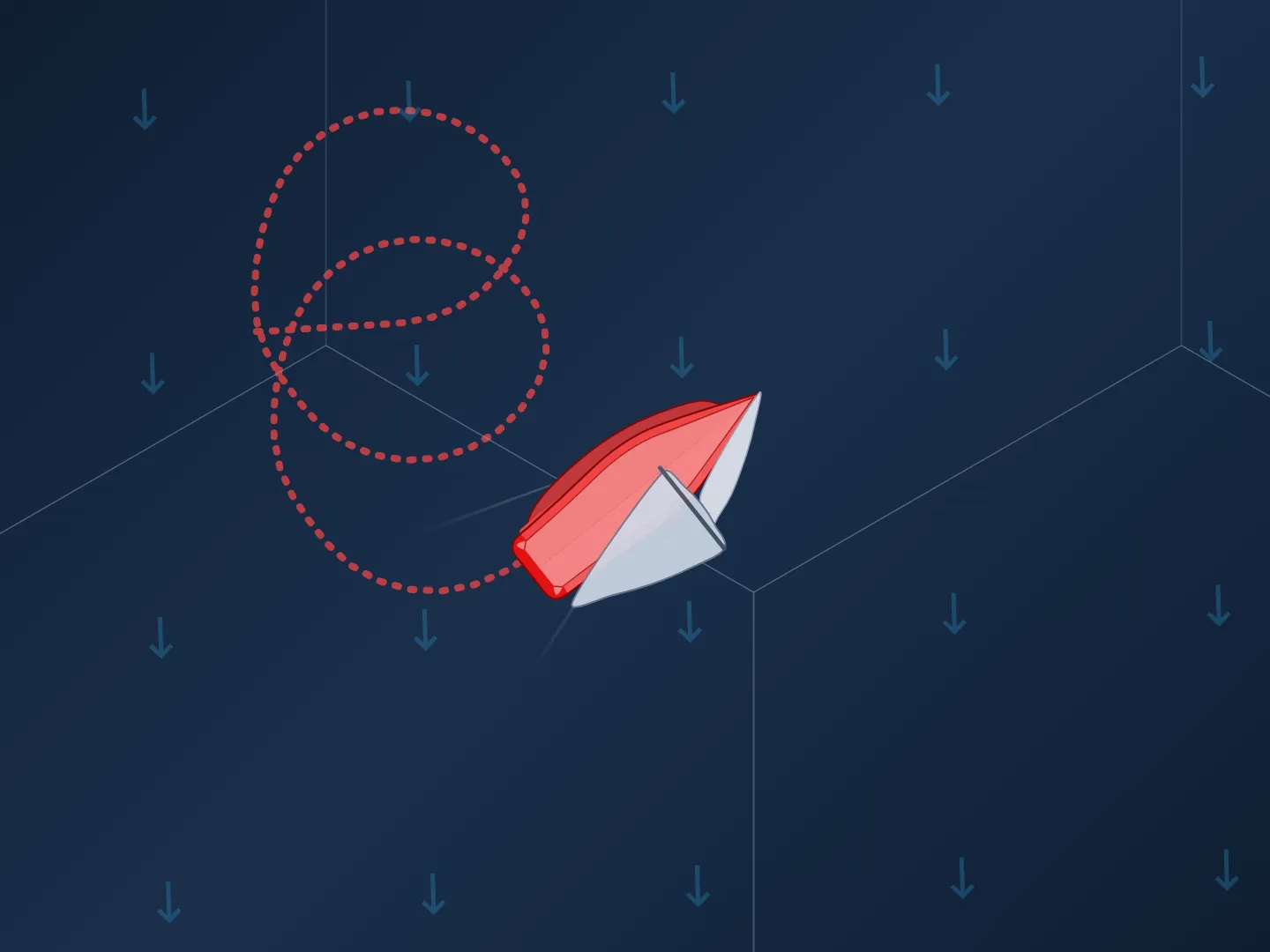
Sail it
Two boats reach the windward mark one behind the other. Sail the boat astern, follow her round, and do not touch the mark.
Questions
What is the penalty for hitting a mark in sailing?
A One-Turn Penalty: one turn including one tack and one jibe, taken promptly once you are well clear of other boats (rules 44.1 and 44.2). The sailing instructions can set a different one.
Does rule 31 apply after finishing?
Yes, for a finishing mark. You are still racing until you have cleared the finishing line and marks, so touching a finishing mark after you cross the line breaks rule 31.
Do I have to take a penalty if no one saw me touch the mark?
Yes. The basic principle of the racing rules is that a boat that breaks a rule promptly takes a penalty, whether or not anyone protests. A penalty turn is the cheap way out.
Paraphrased from rule 31 of the Racing Rules of Sailing 2025-2028, not quoted. The rule text is World Sailing's, and the rulebook is what a protest hearing reads.